Symptothermal method: how to read your cycle, and what the method is really worth
This article is for informational purposes and does not replace either a medical consultation or training. Using the symptothermal method as contraception requires supervised instruction. The Haute Autorité de Santé states that “specific training for the woman and/or couple is necessary.” Reading a web page, however comprehensive, is not enough to use it as a way to avoid pregnancy.
No self-observation method protects against sexually transmitted infections.
Stopping the pill and finding yourself face-to-face with a cycle you do not know. This is often where interest in the symptothermal method begins: the desire to understand what is happening rather than suppress it.
The symptothermal method is a method for observing the menstrual cycle that combines two indicators recorded every day: waking basal body temperature and the appearance of cervical mucus. Taken together, these two signs help identify the fertile period and confirm that ovulation has occurred. It can be used to avoid pregnancy, achieve pregnancy, or simply understand your body.
It is also a demanding method, whose effectiveness varies greatly depending on the training received and the rigor with which it is applied. Here is how it works in practice, and what the figures—the real ones—say.
The symptothermal method is not an app that predicts ovulation. It is the daily observation of two real signs, with precise rules for interpreting them.
- The two signs: waking body temperature, which rises by 0.2 to 0.5°C after ovulation, and cervical mucus, which becomes clear and stretchy as ovulation approaches.
- The principle: sperm survive for up to 5 days, while the egg survives for about 12 hours. The fertile window therefore covers approximately 6 days per cycle.
- The basic rule: neither sign is sufficient on its own. It is their convergence that allows a conclusion to be drawn.
- Effectiveness: the gap between sources is enormous, ranging from 1.8 to more than 30 pregnancies per 100 women per year. What explains the difference is training and rigor.
- The condition set by the HAS: specific training is necessary, and the possibility of an unintended pregnancy must be acceptable.
- Not reliable after childbirth until cycles have returned, as menopause approaches, or in adolescents with irregular cycles.
- No protection against STIs.
What is symptothermal method?
A multi-indicator self-observation method
The MSD Manual classifies the symptothermal method among fertility awareness-based contraceptive methods, and defines it as the method that combines basal body temperature, observation of cervical mucus, and a calendar indicator.
The name says exactly what it does: sympto refers to the symptoms observed, starting with cervical mucus, and thermie refers to temperature. The principle is never to rely on a single indicator. Two independent signs must converge before drawing any conclusion.
Some approaches add a third indicator: self-examination of the cervix, which softens, opens, and rises as ovulation approaches. It is optional, more difficult to interpret, and most training programs present it as a complement rather than a criterion in its own right.
What distinguishes it from other natural methods
The French National Health Insurance Fund describes several so-called natural methods, and they are by no means equivalent. Confusing them is the main source of misunderstanding on the subject.
| Method | What it is based on | What it is worth |
|---|---|---|
| Calendar (Ogino) | A calculation based on previous cycles | Suitable only for very regular cycles. It is a prediction, not an observation |
| Temperature alone | The 0.2 to 0.5°C rise after ovulation | Confirms ovulation, but always after the fact |
| Cervical mucus (Billings) | The appearance of secretions | Predicts ovulation in advance, but is based on an isolated sign |
| Symptothermal method | Cross-referencing temperature and cervical mucus | Combines anticipation based on cervical mucus with confirmation from temperature |
| Ovulation tests (LH) | Luteinizing hormone in urine, which rises 24 to 48 hours before ovulation | Useful for conception, but insufficient on its own to prevent pregnancy |
| Withdrawal | Nothing observable | It is not an observation method |
Swipe the table horizontally.
The essential difference can be summed up in one sentence: the calendar predicts, symptothermal methods observe. This is also why an app that announces your ovulation based on your past cycles is not using the symptothermal method, but disguised Ogino. We explain below what menstrual cycle tracking apps can and cannot do.
The fertile window: the principle of the method
Six days per cycle, no more
The entire method is based on two biological durations, as specified by the MSD Manual.
Combining the two gives an approximately six-day fertile window: the five days before ovulation and the day of ovulation itself. The rest of the cycle is infertile, provided you know precisely where you are in the cycle. And that is precisely the challenge.
Why you cannot rely on a calendar alone
Ovulation does not occur on day 14. It occurs fourteen days before the next period, and it is the first part of the cycle that varies. Stress, travel, or illness can delay it by several days, as we explain in the factors that disrupt periods.
That is the purpose of observation: a shifted cycle can be seen in the chart and in cervical mucus, whereas a calculation misses it entirely. For people with an irregular menstrual cycle, it is even the only usable reference, and our article on the phases of the menstrual cycle lays out the useful basics before you begin.
Basal temperature, the first sign
What the chart tells us
After ovulation, the corpus luteum produces progesterone, which raises resting body temperature. Assurance Maladie puts this rise at 0.2 to 0.5°C, while the MSD Manual refers to approximately 0.5°C after the egg is released.
The chart is therefore read as two plateaus: a low plateau before ovulation and a high plateau afterward. The shift marks the transition into the luteal phase. One crucial point that is often misunderstood: temperature confirms; it does not predict. When the rise appears, ovulation has already occurred.
How to take it correctly
- Upon waking, before getting upBefore speaking, drinking, or sitting up. The slightest movement can distort the reading.
- At roughly the same timeAfter getting enough uninterrupted sleep, without any major disruptions.
- Always use the same routeOral, vaginal, or rectal, but never switch during the cycle.
- With the same thermometer, to two decimal placesA thermometer that displays only one decimal place cannot detect a rise of 0.2°C.
- By recording everything right awayOn a paper chart or in an app, including any disruptions that day.
What throws off a temperature reading
A chart is read with its irregularities, and recording them is part of the method. A night that is too short, a shifted wake-up time, an evening involving alcohol, a feverish state, jet lag, night work: all are factors to exclude from the interpretation rather than blindly incorporate.
This also explains why the method requires several cycles before it can be used. You do not learn to read a chart by looking at it once.
Cervical mucus, the second sign
The sign that anticipates ovulation
Cervical mucus is produced by the cervix and changes in appearance throughout the cycle under the influence of estrogen. As ovulation approaches, the MSD Manual describes it as becoming more abundant, stretchier, clearer, and more fluid, like raw egg white. Assurance Maladie describes it as abundant, fluid, and stretchy.
It is the only sign that gives a warning before ovulation, which is what makes symptothermal fertility awareness usable for avoiding pregnancy rather than confirming it afterward. Our dedicated article explains the changes day by day and what distinguishes fertile cervical mucus from simple white discharge.
Daily observation
It is done several times a day, noting both the sensation felt at the vulva—dry, damp, or slippery—and the appearance of what is collected. This observation requires honesty with yourself: note what you see, not what you hope for.
A disposable panty liner worn all day absorbs cervical mucus and makes observation significantly more difficult, particularly the sensation at the vulva, which is one of the criteria. Training courses also recommend observing it before any intimate washing, for the same reason.
Another point to know: an infection changes the appearance of secretions and makes them harder to interpret. An imbalance in the vaginal flora makes the period concerned impossible to interpret, and what you need is a consultation, not acrobatic interpretation.
Cross-checking the two signs
Double verification
The heart of the method rests on a simple principle: neither sign is allowed to draw a conclusion on its own. It is the convergence of both that allows you to consider the post-ovulatory phase established.
In practical terms, training teaches you to identify, on the one hand, the temperature shift, confirmed over several consecutive days, and on the other, the last day of fertile cervical mucus followed by dryness, also confirmed over several days. The later of the two markers is the one that counts. Each school has its own precise counting rules, and that is exactly what you will learn in training rather than in an article.
What to do during the fertile period
This is the most practical question, and it is often glossed over. Identifying the fertile window is useless if you have not decided in advance what to do about it. There are only two options, and they must be chosen together.
- Abstinence on those days. This option produces the best results in the German study, with 0.6 pregnancies per 100 women after 13 cycles among couples who adhered to it.
- Condoms, the only barrier method compatible with the method and the only one that also protects against sexually transmitted infections.
The important point is that this choice should be discussed beforehand, not when the question arises. This is also why the symptothermal method works poorly as an individual decision: the fertile period often occurs when libido fluctuates the most, and a couple who have not decided anything improvises.
- The method can only be used after menstruation has returned and, according to HAS, after three consecutive regular cycles have been observed.
- France's national health insurance system advises against it as menopause approaches and for adolescents whose cycles are irregular.
- The MSD Manual states that these methods are not recommended for women who absolutely want to avoid pregnancy.
- None of them protects against sexually transmitted infections.
These reservations do not disqualify the method. They define the framework within which it delivers on its promises.
Is the symptothermal method reliable?
Three sources, three very different figures
This is the question that matters, and the one surrounded by the most approximations. The best approach is to place the figures side by side, along with what each one actually measures.
| Source | Figure | What it covers |
|---|---|---|
| HAS, based on WHO data | 25 pregnancies per 100 women in the first year, with typical use | All other fertility awareness-based methods combined, without distinguishing the symptothermal method |
| MSD Manual, Professional Edition | 11.2 to 33.0 per 100 woman-years, with typical use | The symptothermal method under real-world conditions, with a very wide range |
| Sensiplan study, 900 women and 17,638 cycles | 1.8 per 100 women after 13 cycles | Couples who received training and follow-up, all situations combined |
| Same study, subgroup | 0.6 per 100 women after 13 cycles | Only couples who had no unprotected intercourse during the fertile period |
Swipe the table horizontally.
What explains such a difference
Between 0.6 and 33, the factor is more than fifty. There are three reasons for this, and understanding them is better than remembering a single figure.
- The WHO figure combines highly unequal methods, from calendar-based methods to comprehensive self-observation. It says nothing about the symptothermal method taken in isolation.
- Training changes everything. The participants in the German study had received training and were monitored. This is exactly the condition set out by HAS when it states that specific training for the woman and the couple is necessary.
- Behavior during the fertile period matters more than the method. The difference between 1.8 and 0.6 in the same cohort does not come from the method, but from what couples do during the days identified as fertile.
In this same study, 9.2 out of 100 women abandoned the method due to dissatisfaction. This is an honest and useful figure: the symptothermal method requires daily consistency and shared management of abstinence or protection during the fertile period. It is not reliability that makes people abandon it, but the burden.
The study authors' conclusion is clear and worth quoting verbatim: the symptothermal method is highly effective provided that the method's rules are followed consistently. All its reliability depends on this condition. HAS adds the corresponding caveat: the possibility of an unintended pregnancy must remain acceptable to you. If that is not the case, another contraceptive method is more suitable, and the copper IUD remains a hormone-free option.
Use the symptothermal method to conceive
Target the right days, not the presumed day
The same tool works in exactly the opposite way, and that is when it is easiest to use, since a mistake does not have the same consequences.
When trying to conceive, the most useful intercourse is on the days when cervical mucus is clear and stretchy, not on a calculated ovulation day based on a theoretical cycle. Many couples who have been trying for several months discover, through observation, that they were targeting the wrong days. A longer cycle does not mean ovulation is absent; it means ovulation occurs later.
What the chart reveals about your own cycle
Beyond timing, a few months of observation provide concrete information: the actual length of your cycles, the actual date of ovulation, the length of the luteal phase, and whether or not there is spotting before your period. These are all things no app can guess.
A useful clarification, since the question always comes up: conception is possible whenever intercourse takes place during the five days preceding ovulation, which explains why it is still possible to get pregnant during your period when ovulation occurs early.
Cycle observation and assisted reproduction
What observation can provide
Arriving at your first appointment with several documented cycles changes the nature of the conversation. Your healthcare professional has real data rather than estimates: cycle length, timing of ovulation, length of the post-ovulatory phase, and cycle-to-cycle regularity.
This obviously does not replace any medical examination. A fertility assessment is based on hormone tests, an ultrasound, and a semen analysis—not on a temperature chart. However, careful records can save time during the medical history and help guide questions.
What it cannot do
Symptothermal method is not a fertility test and does not diagnose anything. It says nothing about the patency of the fallopian tubes, ovarian reserve, or sperm quality. During an assisted reproduction journey, the medical team is in charge, and stimulation protocols alter the cycle in any case, to the point that observation is no longer workable.
If you have been trying to conceive for twelve months without success, or for six months after age 35, the right thing to do is consult a doctor—not observe one more cycle.
The benefits and limitations
What it provides
- No hormones, no device. Your cycle remains your body's own cycle, with real ovulation and real periods, unlike periods on the pill, which are withdrawal bleeding.
- A detailed understanding of your cycle, which can be used to conceive, spot a change, or describe a symptom to a doctor.
- Immediately reversible, with no elimination period or removal required.
- Can be used when cycles are irregular, unlike the calendar method, because it observes rather than predicts.
- Virtually no ongoing cost after the thermometer and training.
What it really costs
- A daily commitment, seven days a week, including holidays and weekends.
- A fertile period to manage together, through abstinence or condoms. This is a couple’s issue, not an individual matter.
- A learning period of several cycles, during which another form of protection remains necessary.
- Conditional reliability, highly sensitive to deviations, as the figures above show.
- Situations in which it does not apply: after giving birth until cycles have returned, as detailed in our article on the return of menstruation after childbirth, as menopause approaches, in the case of night-shift work, or during an episode of stress that affects your periods.
- No protection against STIs.
Finally, an observation method does not eliminate the need to know about backup options. In the event of unprotected sex during the fertile window, our article on the morning-after pill explains the deadlines to follow.
Getting started with the symptothermal method in practice
The equipment—and there isn’t much
- A thermometer accurate to two decimal places, kept for this purpose and not shared.
- A tracking medium, either a paper chart or an app, provided it records your observations instead of making predictions for you.
- Training, with a trained midwife or symptothermal-method counselor. This is the only truly essential item.
Choosing a tracking tool
The distinction is simple, and crucial. An app that tells you “ovulation expected on the 14th” based on your previous cycles is performing a calculation, not an observation. A symptothermal-method app simply records your temperatures and observations of cervical mucus, then applies the method’s rules to that real data.
Our articles on why use an app to track your menstrual cycle and our selection of books to better understand your cycle offer some starting points. The glossary of the female reproductive system also helps establish the vocabulary before you begin.
The day-to-day practice of observation, and what it changes
Looking at your discharge every day is a small revolution in perspective for many women. It is similar to what the free instinctive flow approach describes: paying attention to the body rather than delegating that attention.
Two practical consequences consistently come up for those who adopt it. First, they no longer want a disposable daily panty liner, which absorbs precisely what they are trying to observe. Second, after stopping hormonal contraception, they get their natural periods back, often heavier than the withdrawal bleeding they had become accustomed to.
 The most discreet
 Organic cotton
 Best seller
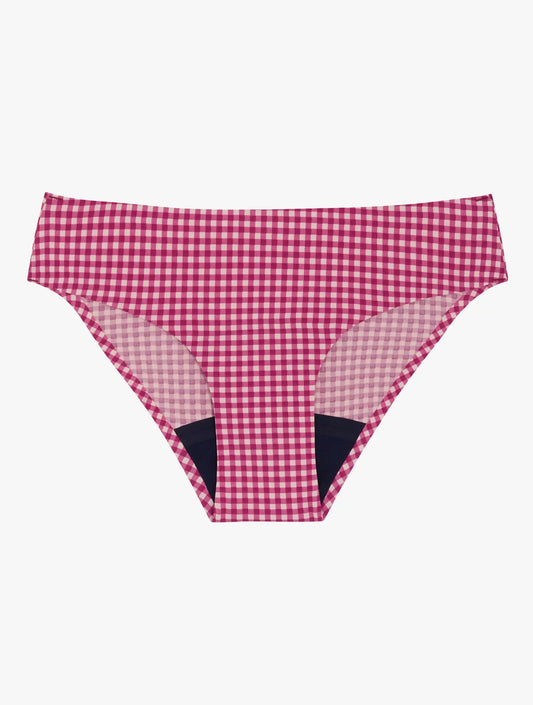
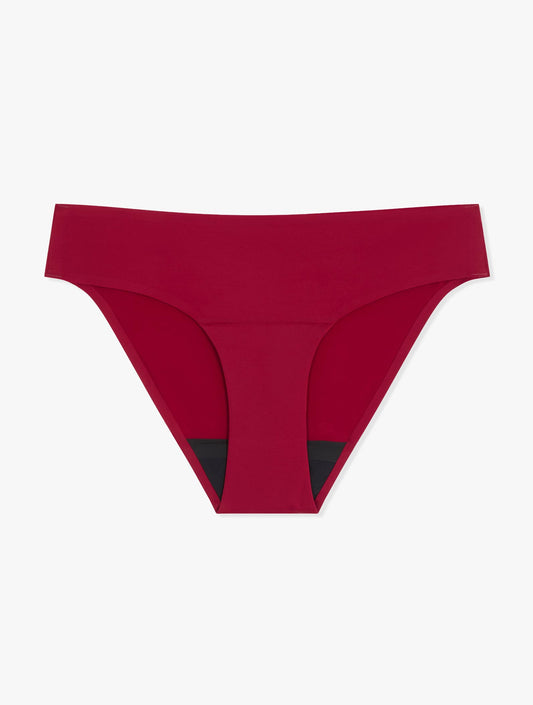
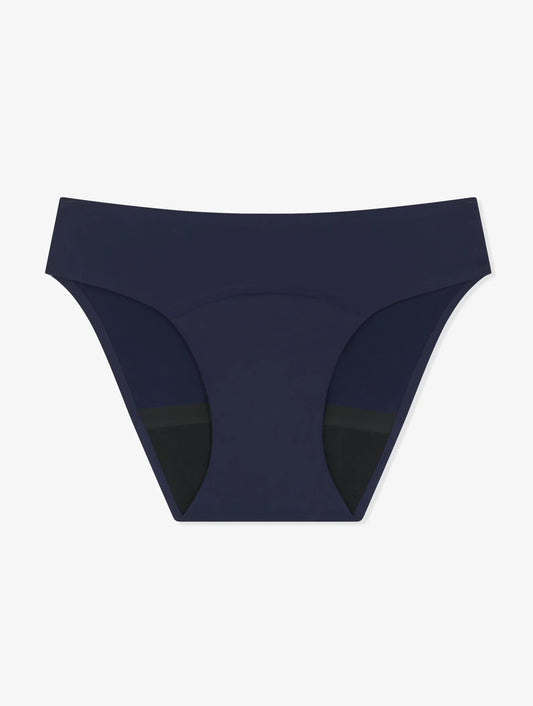
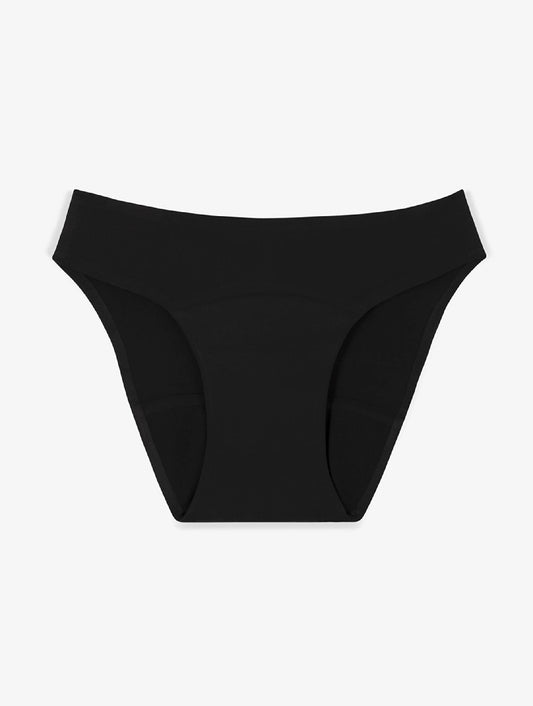
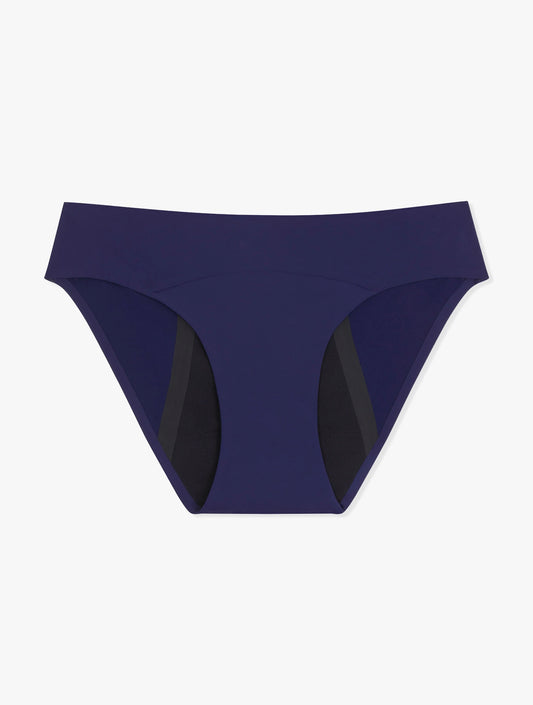
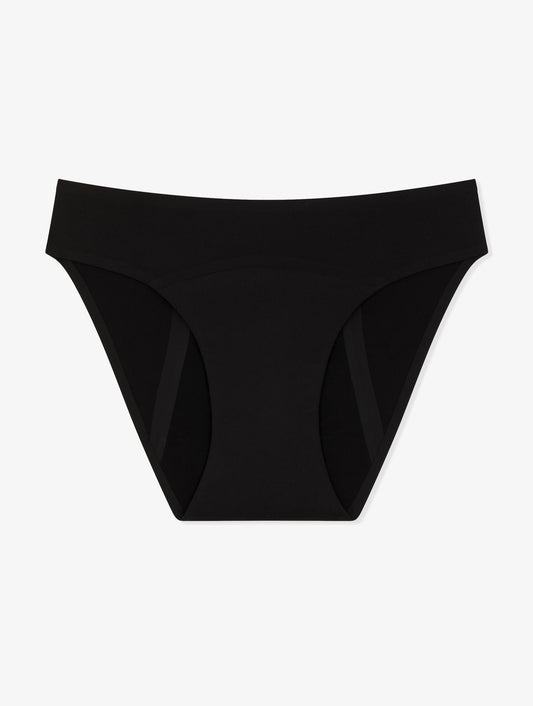
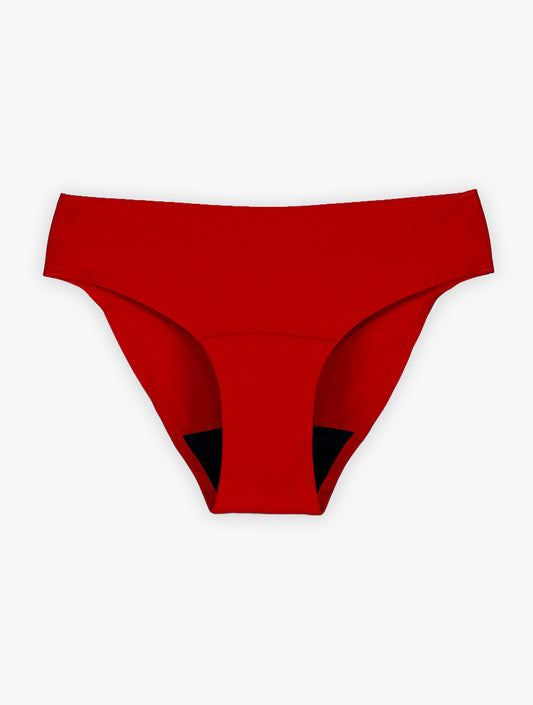
To be clear: a menstrual panty has no effect on your fertility, does not replace any form of contraception, and does not make symptothermal fertility awareness more reliable. It solves a practical issue—the protection you wear every day—and nothing more.
If you're hesitating between the models, our menstrual panty comparison tool puts them head to head, the cotton menstrual panty range keeps organic cotton against your skin, and the panties for light everyday discharge cover non-period days.
Frequently asked questions about symptothermal fertility awareness
-
01What exactly is symptothermal fertility awareness?
It is a method of observing the menstrual cycle that combines two indicators recorded every day: body temperature upon waking, which rises by 0.2 to 0.5°C after ovulation, and the appearance of cervical mucus, which becomes clear and stretchy as ovulation approaches. The MSD Manual classifies it among fertility awareness–based methods and explains that it combines basal temperature, cervical mucus, and a calendar reference point. Some approaches also include optional self-examination of the cervix.
-
02How does the symptothermal method differ from other natural methods?
The difference can be summed up in one sentence: the calendar predicts, while the symptothermal method observes. The Ogino method calculates the fertile period from previous cycles, which assumes very regular cycles. The temperature-only method confirms ovulation, but always after the fact. The Billings method observes only cervical mucus. The symptothermal method combines two independent signs, allowing it both to anticipate fertility through cervical mucus and to confirm ovulation through temperature. The MSD Manual indicates that it has a lower pregnancy rate with perfect use than the TwoDay Method or the Standard Days Method.
-
03Is the symptothermal method reliable for avoiding pregnancy?
The sources vary enormously, and this is the most important information. According to the WHO, the French National Authority for Health cites 25 pregnancies per 100 women during the first year of typical use for all fertility-awareness methods. The MSD Manual gives a range of 11.2 to 33.0 per 100 woman-years for the symptothermal method. Conversely, a German study involving 900 women and 17,638 cycles observed 1.8 unintended pregnancies per 100 women after 13 cycles, and 0.6 among couples who had no unprotected intercourse during the fertile period. The difference is explained by the training received and by behaviour during the fertile period.
-
04Is training required to practise the symptothermal method?
Yes. The French National Authority for Health states that specific training for the woman and the couple is necessary. It also specifies that these methods can only be used after menstruation has returned and after three consecutive regular cycles have been observed, and that the possibility of an unplanned pregnancy must be acceptable. Training is provided by a trained midwife or a symptothermal-method counsellor. No article or app can replace it.
-
05How should you take your basal temperature correctly?
When you wake up, before getting up, talking, or drinking, at roughly the same time and after sufficient sleep. Always use the same route—oral, vaginal, or rectal—without changing it during the cycle, and use the same thermometer displaying two decimal places. A thermometer displaying only one decimal place cannot detect a 0.2°C rise. Record the measurement immediately, along with any factors affecting the day: a short night, waking at a different time, alcohol, fever, or jet lag.
-
06What are the advantages of the symptothermal method compared with hormonal methods?
They involve no hormones or devices: the cycle remains the body’s natural cycle, with actual ovulation and actual periods, whereas bleeding while taking the pill is withdrawal bleeding. They are immediately reversible, cost almost nothing beyond a thermometer and training, remain usable when cycles are irregular, and provide detailed knowledge of the cycle that can later be used to conceive. On the other hand, they require daily observation, managing the fertile period as a couple, several learning cycles, and their effectiveness is highly sensitive to deviations from the method.
-
07Can symptothermal methods help you get pregnant?
Yes, and this is the simplest use, since an error does not have the same consequences. Sperm can fertilize an egg for up to five days after intercourse, while the egg can be fertilized for only about twelve hours, resulting in a fertile window of approximately six days. The most useful intercourse therefore takes place on days when cervical mucus is clear and stretchy, rather than on an ovulation day calculated from a theoretical cycle. Several months of observation also provide information about the actual length of cycles and the date ovulation actually occurs.
-
08Are symptothermal methods useful during assisted reproductive treatment?
It can provide concrete data at the first appointment: the actual length of cycles, the date of ovulation, the duration of the post-ovulatory phase, and cycle-to-cycle regularity. However, it does not replace any medical examination. A fertility assessment is based on hormone tests, an ultrasound, and a semen analysis—not on a temperature chart—and symptothermal methods reveal nothing about fallopian tube patency, ovarian reserve, or sperm quality. In an assisted reproductive technology treatment, stimulation protocols alter the cycle to such an extent that observation becomes ineffective.
-
09In which situations are symptothermal methods unreliable?
After childbirth, until cycles have returned; as menopause approaches; and in adolescents with irregular cycles—situations that France’s National Health Insurance explicitly identifies. Also in cases of night work or highly irregular sleep patterns, which make temperature readings impossible to interpret, and during a vaginal infection, which changes the appearance of secretions. The MSD Manual adds that these methods are not recommended for women who absolutely want to avoid pregnancy.
-
10Is an app enough to use symptothermal methods?
No, and it is important to distinguish between two types of applications. Those that predict an ovulation date based on your previous cycles use a calendar-based calculation, not symptothermal methods. Those that record your temperatures and cervical mucus observations and apply the method’s rules are useful tracking tools. In both cases, the app does not replace daily observation or training, which remains the only truly essential element.
- French National Health Insurance Fund, Natural methods of contraception, description of the methods, temperature increase of 0.2 to 0.5°C, limitations, and lack of protection against STIs.
- French National Authority for Health, Contraception: focus on so-called natural methods, need for specific training, conditions of use, acceptability of an unplanned pregnancy.
- French National Authority for Health, Contraceptive methods: focus on the most effective methods available, March 2013, last modified November 2017, effectiveness table based on WHO data.
- MSD Manual, professional edition, Fertility awareness-based contraceptive methods, gamete life spans, failure rates, limitations.
- MSD Manual, consumer edition, Birth control methods based on fertility awareness, temperature increase of approximately 0.5°C, appearance of cervical mucus.
- Frank-Herrmann P, Heil J, Gnoth C et al., The effectiveness of a fertility awareness based method to avoid pregnancy in relation to a couple's sexual behaviour during the fertile time, Human Reproduction, 2007, 22(5), 1310–1319. Sensiplan study, 900 women and 17,638 cycles.