Libido during periods: why desire rises for some
Having a strong desire to make love during your period often surprises those who experience it. We were told that desire peaks in the middle of the cycle, at ovulation, and yet it rises exactly when we least expect it.
Good news: it’s perfectly normal, and science explains quite well why. It also explains why it doesn’t happen to everyone, which is just as normal.
On average, sexual desire increases slightly in the middle of the cycle. But the variation from one woman to another is much greater than this average, to the point that it makes it almost anecdotal on an individual scale.
- Hormones play a role: estradiol supports desire, progesterone slows it down. Its drop just before the period lifts this brake.
- But they don’t explain everything. In the largest study on the subject, the best predictor of desire was not hormonal: it was feeling good.
- Other factors matter: the end of premenstrual symptoms, the pain-relieving effect of orgasm, the feeling of breaking a taboo.
- Warning: you can get pregnant during your period, and STIs can also be transmitted. Contraception and condoms remain important.
- Feeling nothing special, or having less desire, is just as common. There is no norm to reach.
Is it normal to want more during your period
Yes. It is even frequent enough that we should stop treating it as a peculiarity. Some women experience their peak desire around their period rather than mid-cycle, and this does not indicate any hormonal imbalance.
What is misleading is that it is repeated everywhere that desire peaks at ovulation, around day 14e day. This is true on average, across entire groups of women. It is not an individual rule, and confusing the two is the source of discomfort.
What science really says
The documented peak occurs in the middle of the cycle
The work that follows desire day after day indeed finds an increase in the middle of the cycle. A study published in 2013 measured both hormones and sexual motivation in non-contracepting women: estradiol positively predicts desire from one day to the next, progesterone predicts it negatively. The drop in desire observed after ovulation is statistically explained by the rise in progesterone.
But individual variation outweighs the average
This is the point most articles omit. The largest study available on the subject followed 213 women over two full cycles, totaling 11,735 daily questionnaires. Result: the cycle is indeed associated with a slight increase in desire mid-cycle, but above all with very large variation from one woman to another. Some have a peak at a completely different time. Others show no notable variation.
The best predictor of desire is not hormonal
The same study compared psychological factors (mood, anxiety, energy, happiness) and physical factors (pain, cramps, migraines, breast tenderness). Psychological factors clearly prevailed, and one stood out above all others:
Happiness was the strongest predictor of variation in sexual desire.
Kiesner et al., The Journal of Sexual Medicine, 2023In other words: your mood today weighs more than your hormone levels. This also explains why fatigue, stress, or a difficult period suppress desire regardless of the cycle phase.
Hormones: who does what
Without going into dosages, here are the established roles of the three hormones that consistently appear in studies.
| Hormone | Effect on desire | Where it is high |
|---|---|---|
| Estradiol | Supports desire | End of follicular phase and ovulation |
| Progesterone | Inhibits desire | Luteal phase, after ovulation |
| Testosterone | Associated with desire, role still debated in women | Around ovulation |
Slide the chart horizontally.
This chart sheds light on a commonly suggested reason for menstruation: progesterone drops just before it starts. The brake is released. For some, this release is felt more strongly than the simultaneous drop in estradiol.
Researchers themselves acknowledge that hormone levels do not fully explain the increase in desire observed during the follicular phase. Other signals are likely involved, and they have not yet been identified. Be wary of articles that present the mechanism as fully understood.
Non-hormonal explanations
The end of premenstrual syndrome
Bloating, breast tenderness, irritability, mood swings: the symptoms of the luteal phase generally fade once menstruation begins. Many women report significant relief by the second day. As we have just seen, feeling better is the primary driver of desire. This explanation is perhaps the simplest and most solid.
The pain-relieving effect of orgasm
Orgasms trigger the release of endorphins, which have an analgesic effect, and cause uterine contractions that can help expel the flow. Some women report real relief from their cramps. It’s not a treatment for painful periods, but the effect is often described.
The taboo that excites
Sex during menstruation is still surrounded by taboos. Yet breaking a taboo is itself a well-documented source of excitement. For some, the appeal lies precisely in this aspect.
A feeling of freedom, sometimes misleading
Many feel freer during their period because they believe they are safe from pregnancy. This mental relaxation exists and matters. But the premise is false.
You can get pregnant during your period. Sperm can survive several days in the genital tract, and an early ovulation in a short cycle can be enough. Our article can you get pregnant during your period details the relevant cases.
STIs can also be transmitted during menstruation, contact with blood does not make it any safer. The condom remains the only protection against sexually transmitted infections.
Having sex during your period: in practice
No medical contraindications, and nothing dirty: menstrual blood is not dirty. There are just a few practical tips that make the difference between an enjoyable moment and one spoiled by logistics.
- Remove internal protection. Tampons and cups must be removed before penetrative sex. A forgotten tampon can move up and become difficult to retrieve.
- Have a dark bath towel ready under the sheets. It may seem mundane, but it’s what lets you stop worrying about it.
- Flow is often lighter when lying down. Days 3 and beyond are usually the easiest.
- Showering is an option if the idea of stains bothers you more than anything else.
- The condom also protects your partner from contact with blood, if that is a concern for either of you.
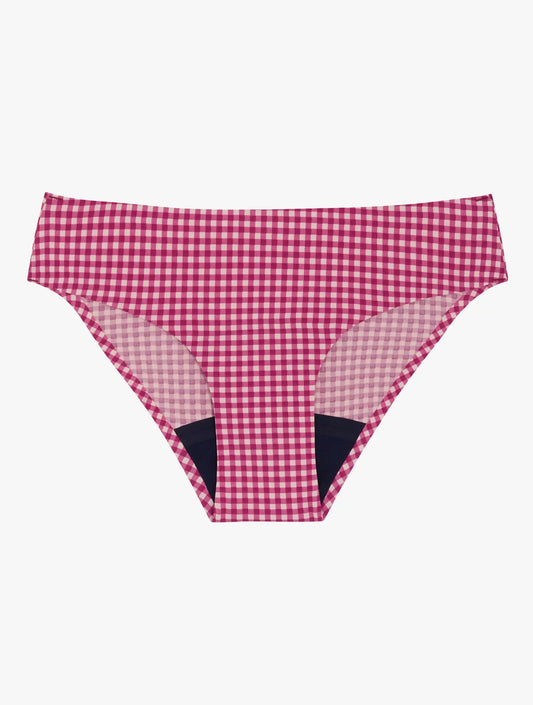
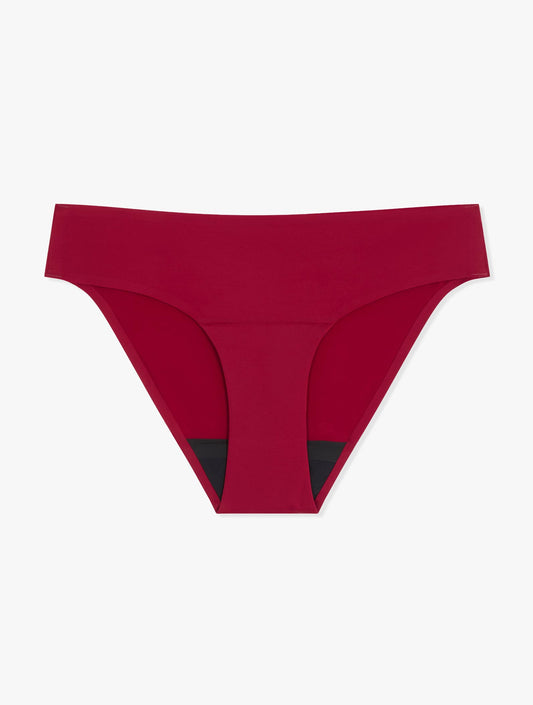
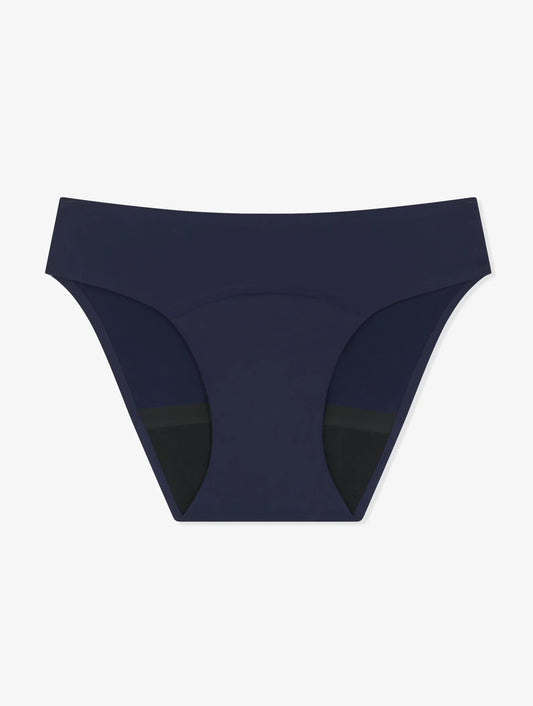
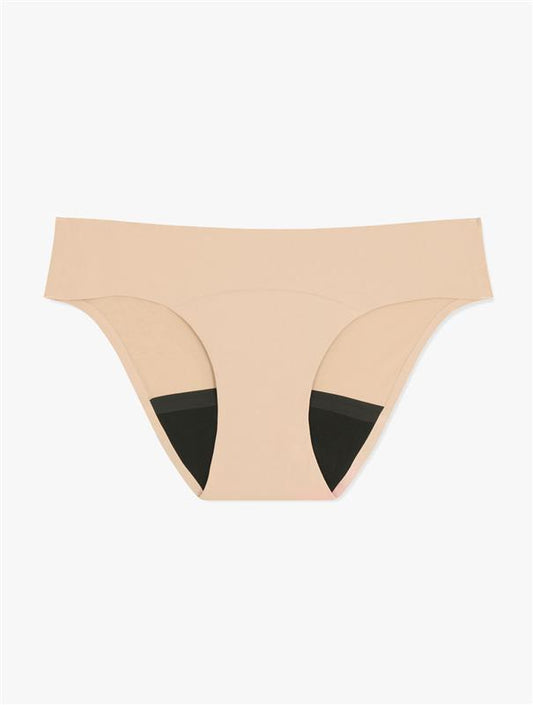
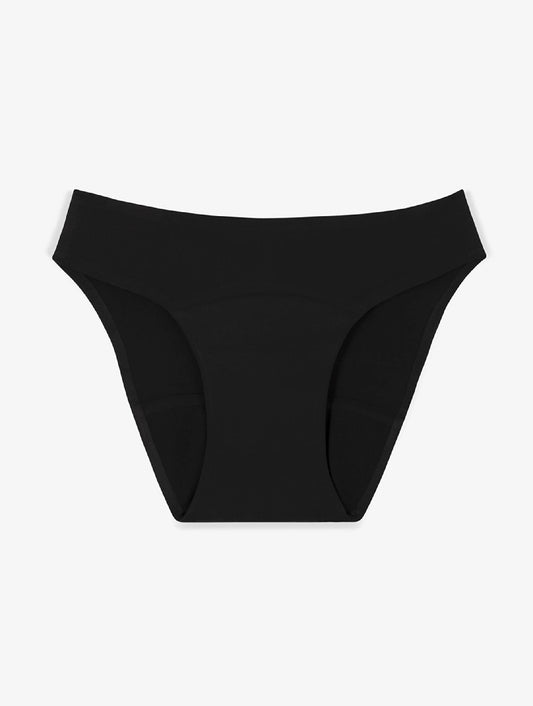
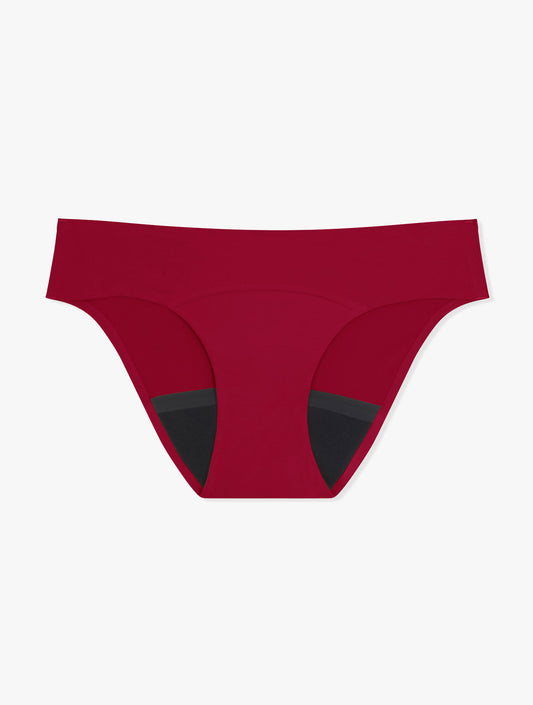
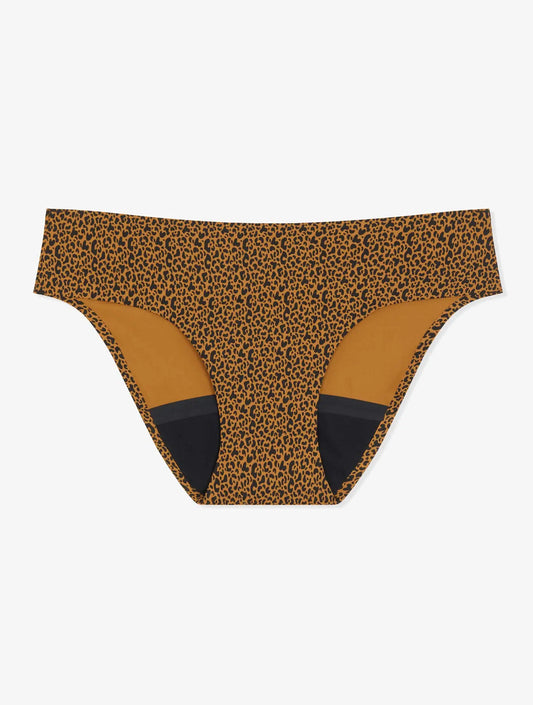
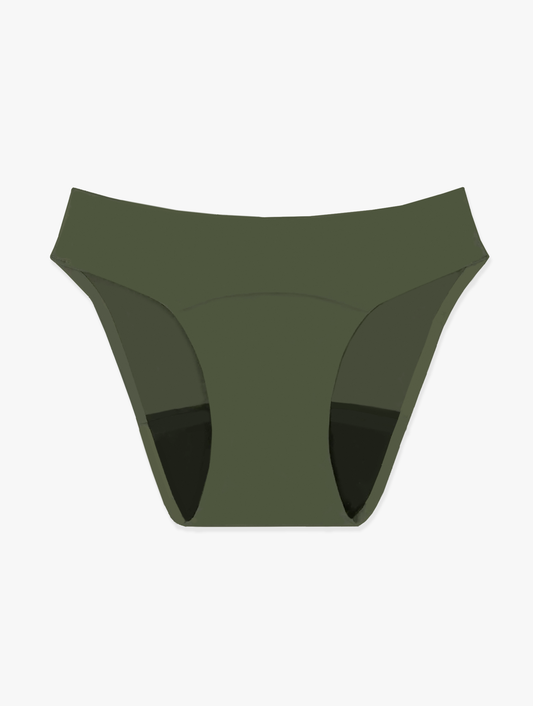
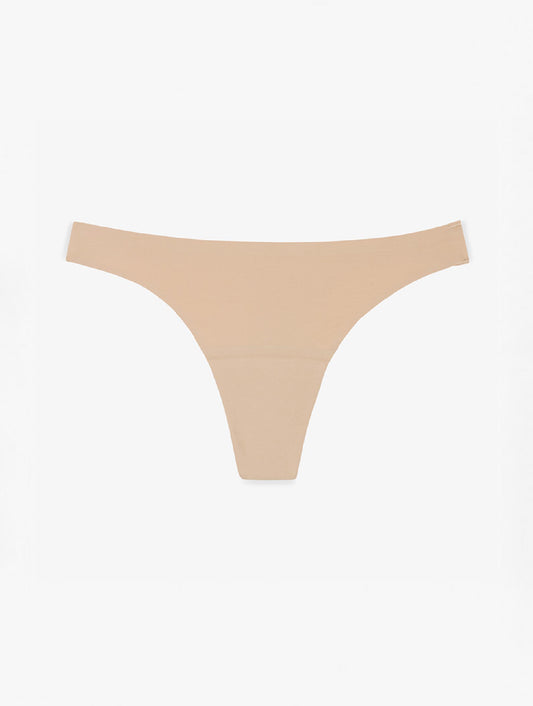
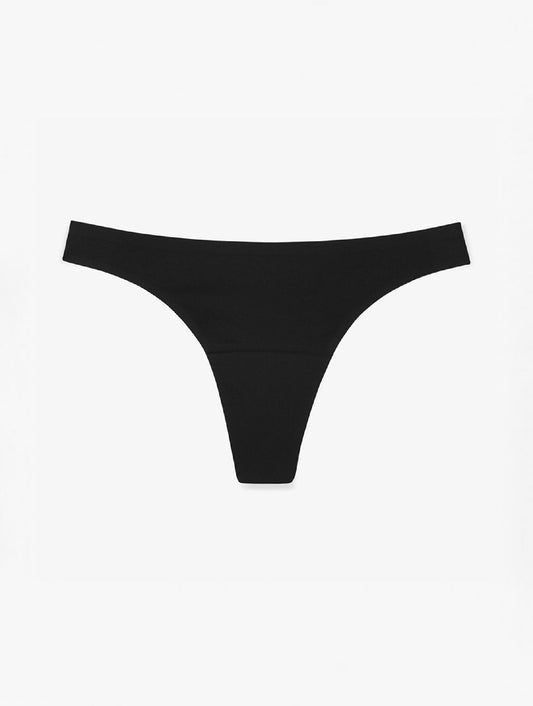
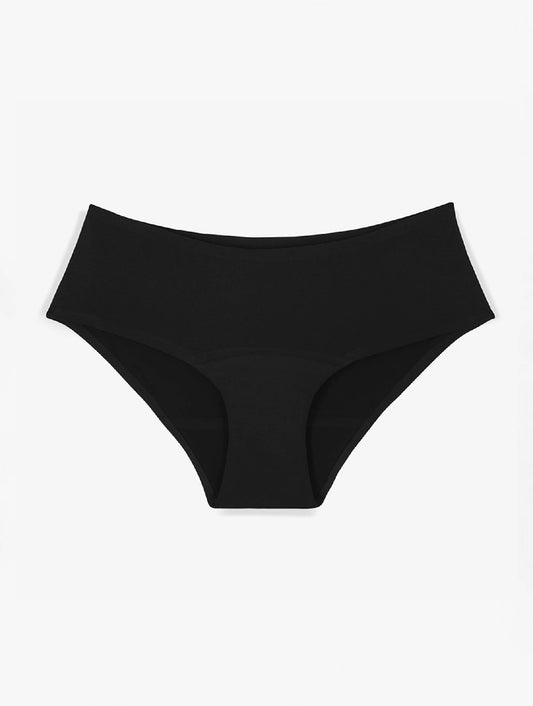
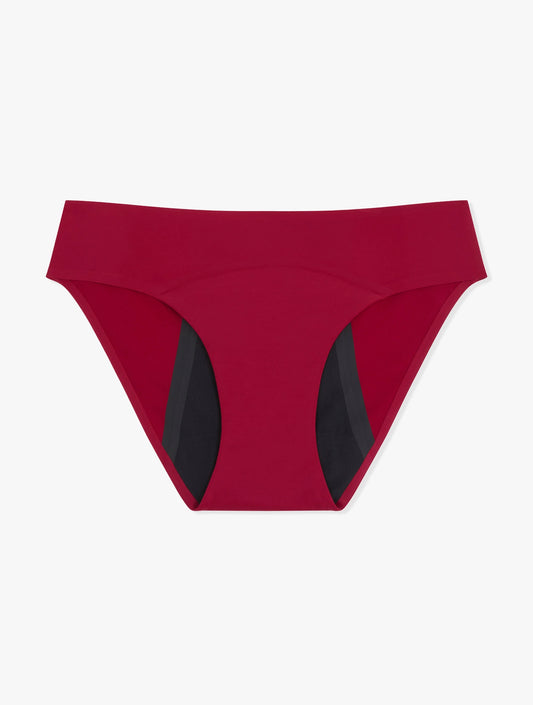
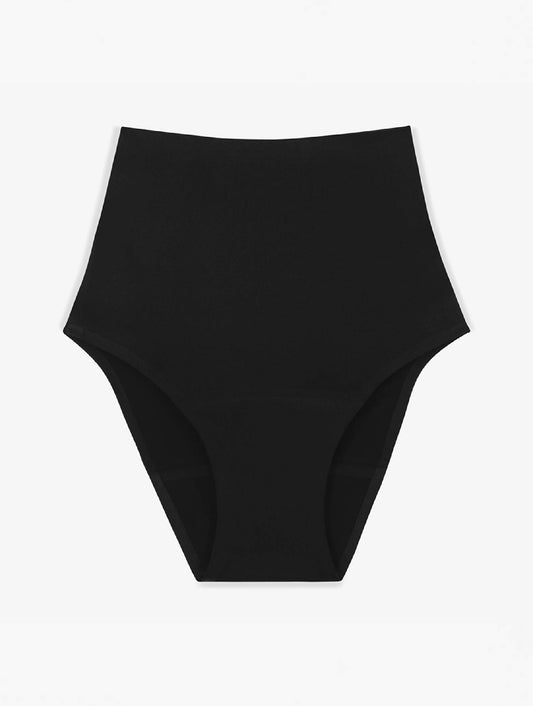
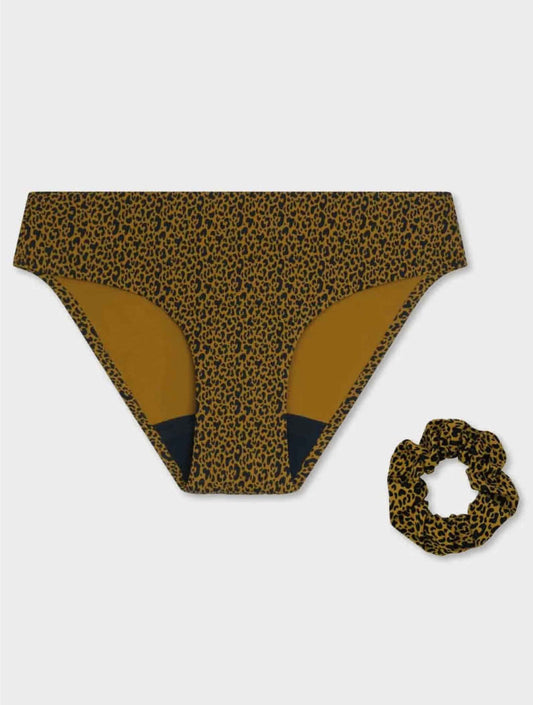
And for the rest of the time, especially before and after, protection you feel good in changes a lot. Feeling comfortable in your underwear is part of the experience, it’s not a minor detail.
 Simone Pérèle
 Light flow
 High waist
And if on the contrary you don’t feel like it
It’s at least as common, and it should be said just as clearly. Cramps, fatigue, bloating, discomfort at the idea of blood, wanting to be left alone: all perfectly valid reasons not to feel desire.
Let’s remember that in the study mentioned above, some participants showed no notable variation in desire throughout the cycle. No peak at ovulation, no peak at the period. This is a normal profile, not an anomaly.
The only real guide: your desire at the moment. There is no calendar to follow, no window you must not miss, and certainly no standard to meet.
Frequently Asked Questions
-
01Is it normal to want to have sex more during your period?
Yes. Desire varies greatly from woman to woman throughout the cycle. On average, studies find a slight increase mid-cycle, but individual variation is much more pronounced than this average: some women experience their peak around their period, others have no notable variation.
-
02Which hormone is responsible for the increase in desire?
None alone. Estradiol supports desire day to day, progesterone inhibits it. The drop in progesterone just before the period lifts this inhibition, which could explain an increase in some women. However, researchers acknowledge that hormone levels do not explain all observed variations.
-
03Can you get pregnant by having sex during your period?
Yes. Sperm can survive for several days in the genital tract, and an early ovulation in a short cycle can be enough to make pregnancy possible. Periods are by no means a method of contraception.
-
04Does having sex during your period relieve pain?
Orgasms release endorphins, which have an analgesic effect, and cause uterine contractions. Many women report relief from their cramps. This remains a common observation and not a treatment for painful periods: if you experience severe or disabling pain, consult a doctor.
-
05Should you remove your tampon or cup before intercourse?
Yes, always in the case of penetrative intercourse. A tampon can be pushed higher and become difficult to remove, and a poorly positioned cup becomes uncomfortable. Remove the protection beforehand and put a new one on afterward.
-
06Is sex during menstruation particularly risky?
There is no medical contraindication. However, sexually transmitted infections can be transmitted during menstruation just as at other times. Condoms remain the only protection against STIs, and they also prevent contact with blood if that is a concern for one of the partners.
-
07Why is my libido low during my period instead?
It is just as common. Cramps, fatigue, and discomfort are enough to lower desire. In the largest study available on the subject, the factor that best predicted variations in desire was not hormonal but psychological: feeling good. Some participants showed no variation throughout the cycle.
-
08At what point in the cycle is libido strongest?
On average, around ovulation, mid-cycle, when estradiol is at its highest. But this average masks very different profiles: it describes a group trend, not a rule applicable to everyone. Comparing yourself to this theoretical calendar is of little use.
- Kiesner J. et al., "Sexual desire across the menstrual cycle," The Journal of Sexual Medicine, 2023, vol. 20 no. 6, pp. 756-765. Study on 213 women followed over two cycles, 11,735 daily questionnaires.
- Roney J. R. and Simmons Z. L., "Hormonal predictors of sexual motivation in natural menstrual cycles," Hormones and Behavior, 2013.
- Health Insurance (ameli.fr), pages dedicated to contraception and sexually transmitted infections.