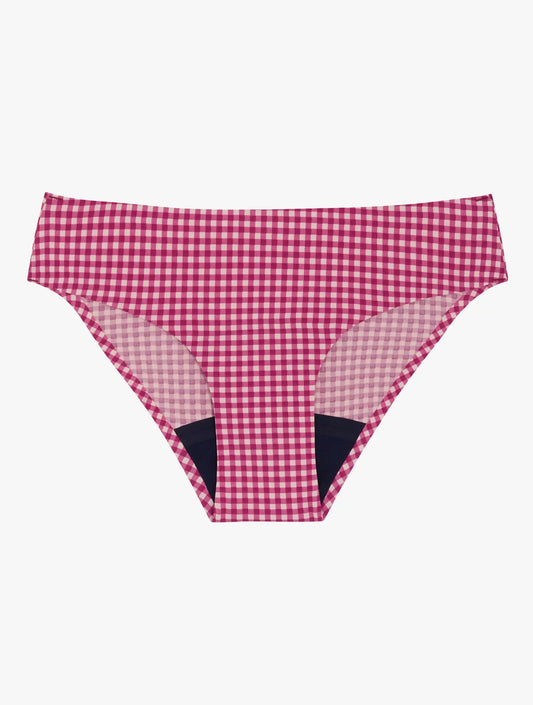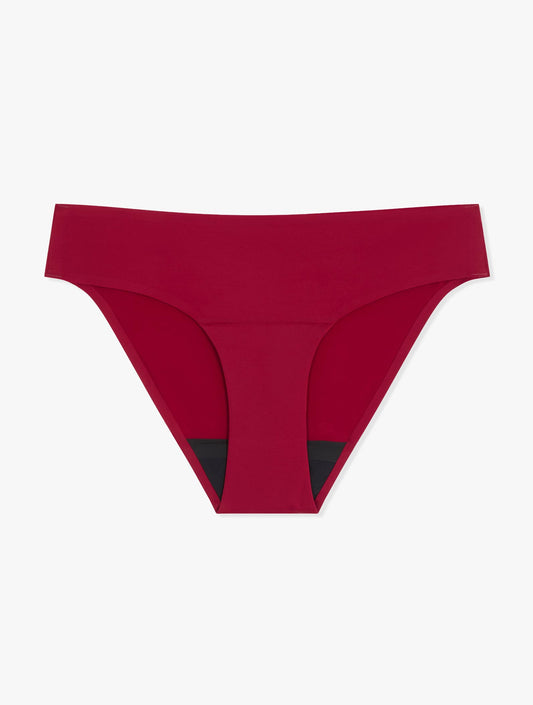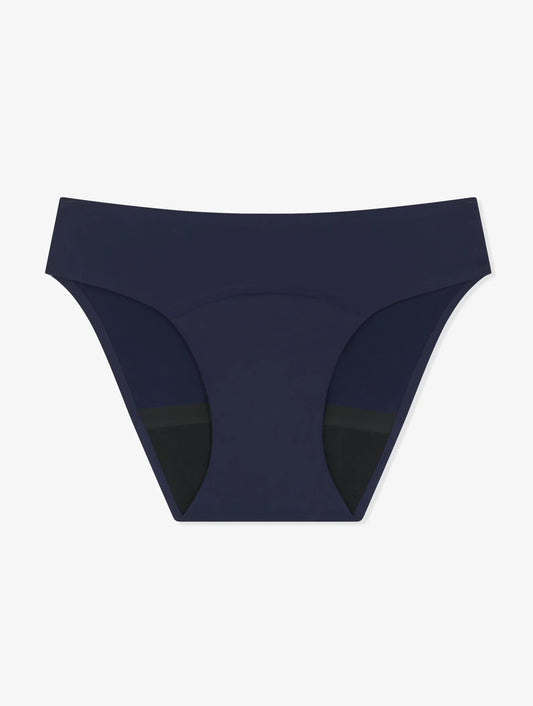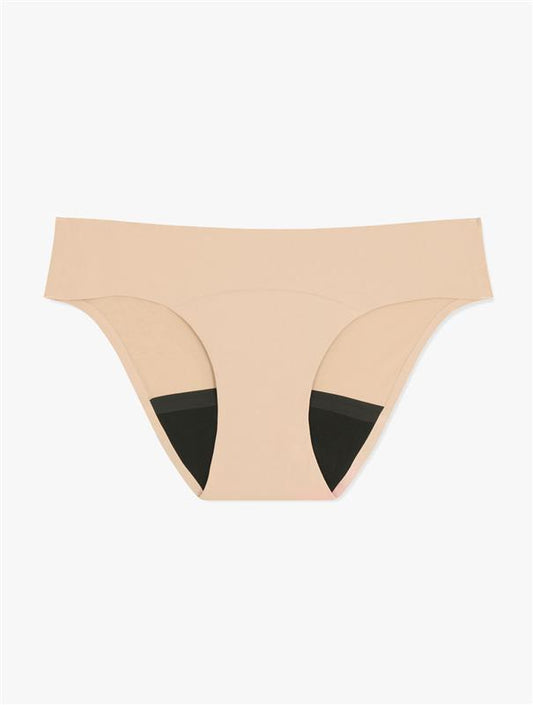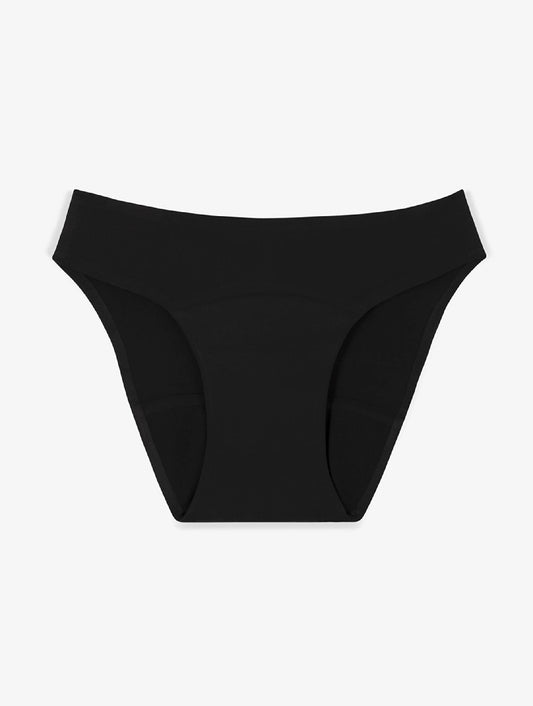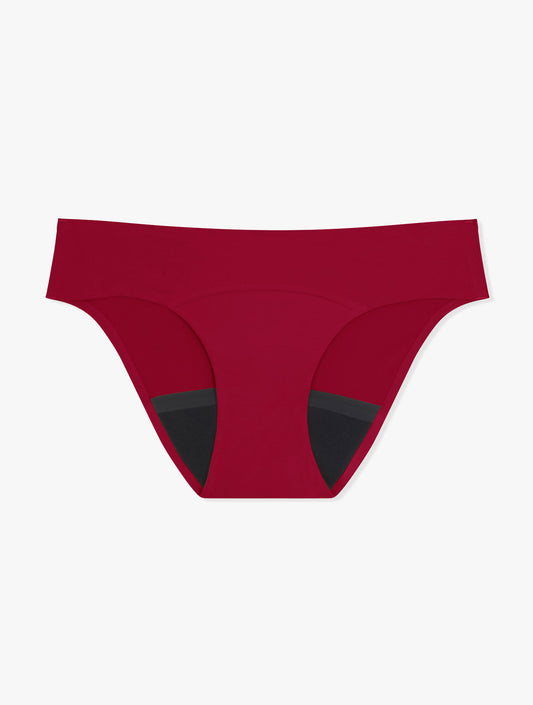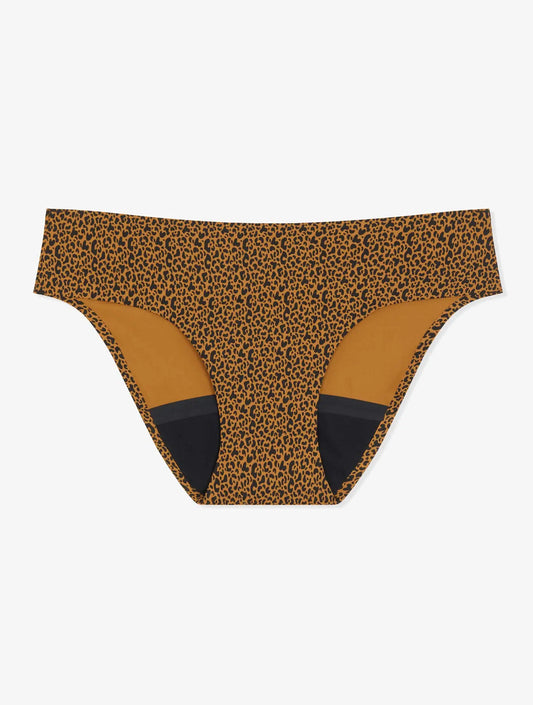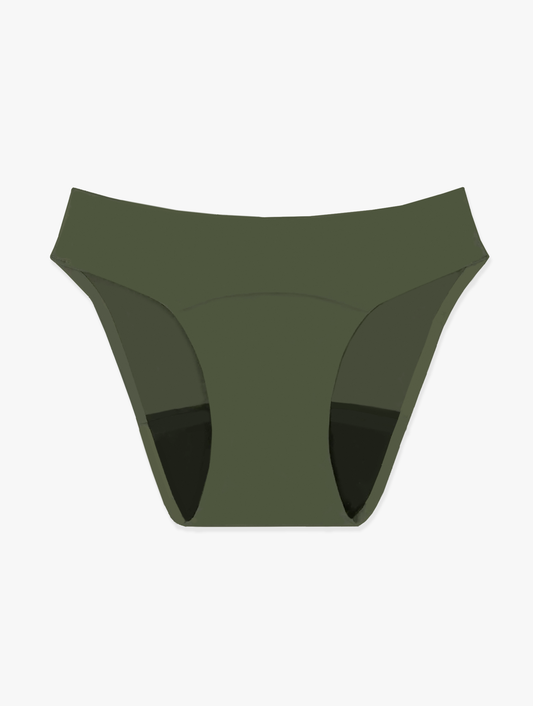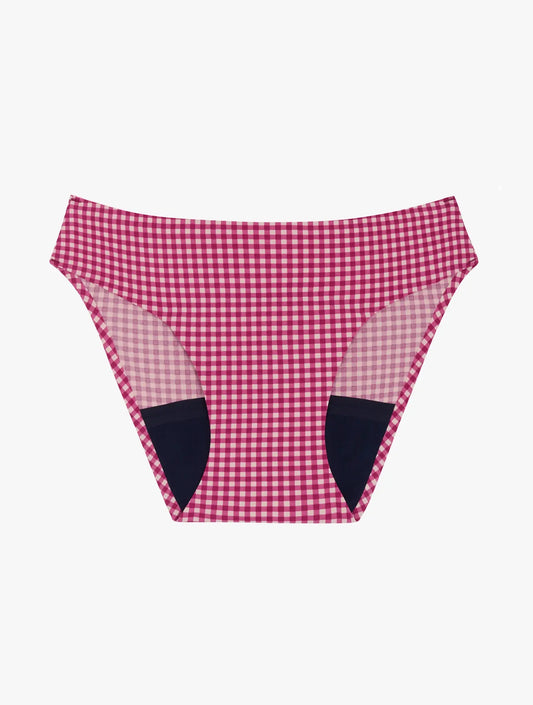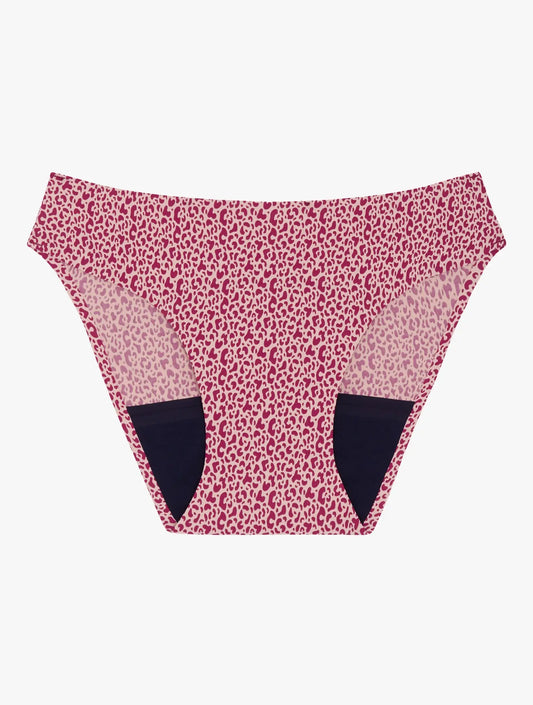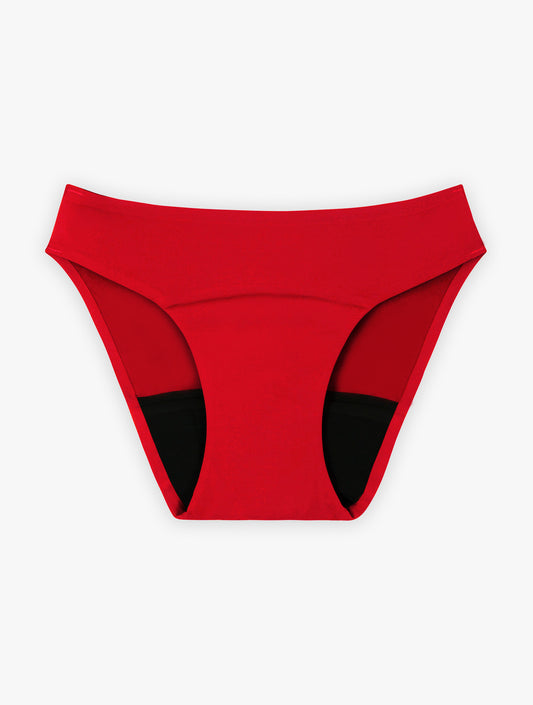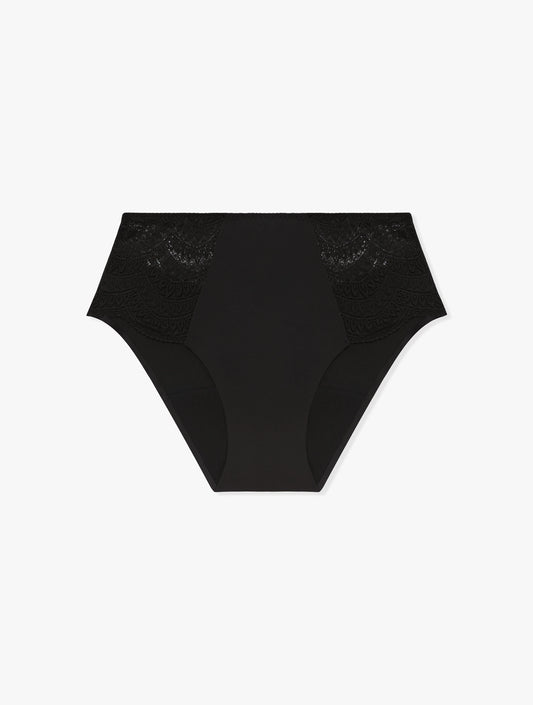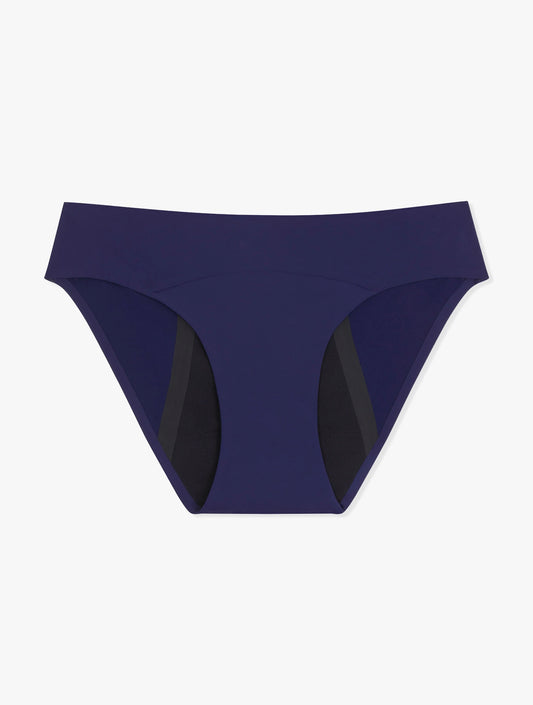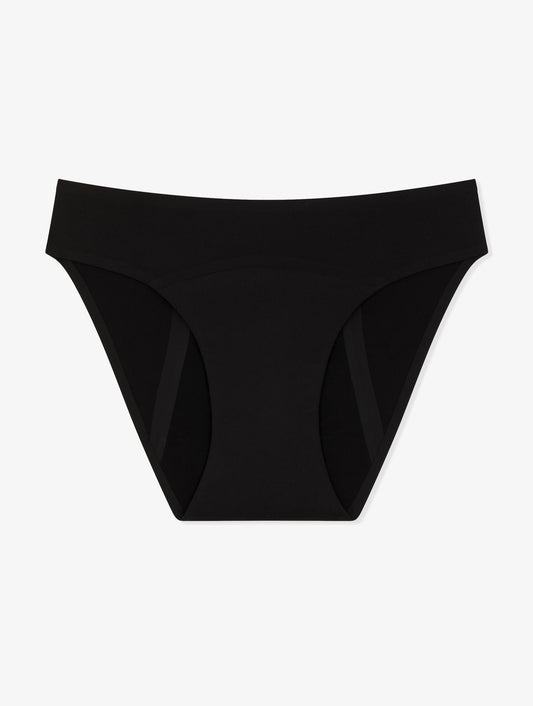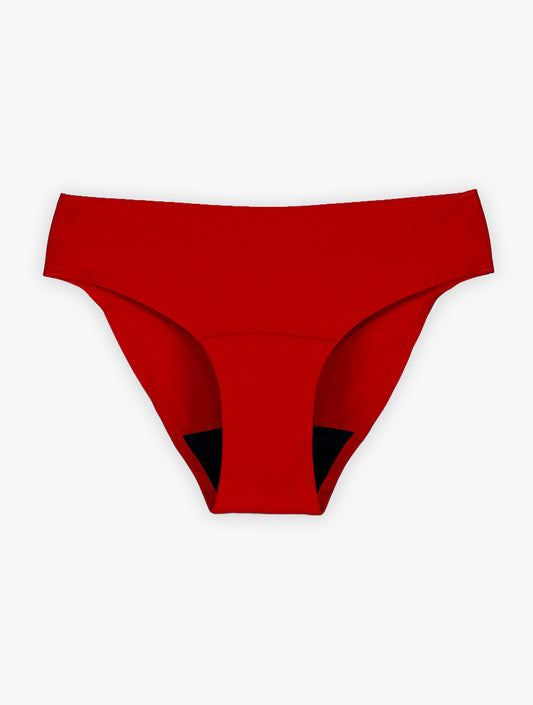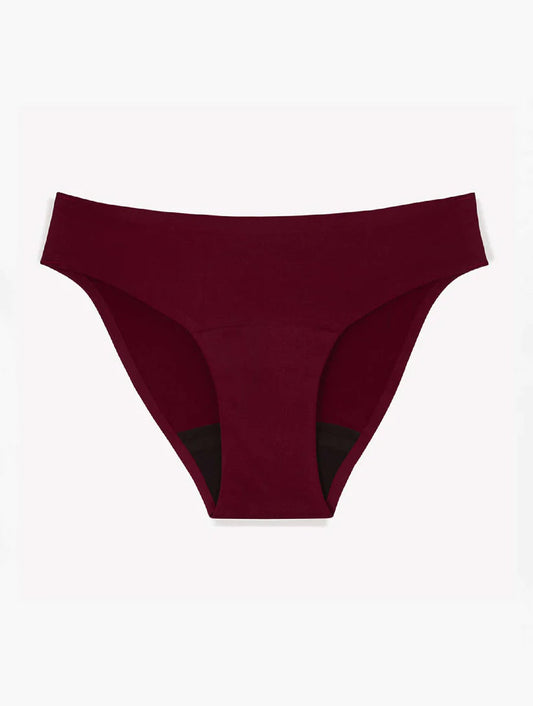
Best menstrual panty: our comparison guide
Choosing your first menstrual panty often feels like a gamble: you don’t know what absorption capacity to aim for, which cut will really hold under jeans, or if the €15 model is worth the €39 one. As a result, many women buy panties that absorb too little, find them disappointing, and go back to disposable products.
This guide is written by a brand that has been making menstrual panties since 2018. We acknowledge a bias upfront. In return, we provide verifiable figures: absorption capacities expressed in milliliters and tampon equivalents, precise flow definitions, certification numbers. Enough to compare any brand, including ours.
The best menstrual panty is the one whose absorption capacity matches your actual flow. This is the only criterion that causes a purchase to fail. Everything else (cut, color, material) is a matter of personal comfort.
- Light flow (start and end of periods): the equivalent of a regular tampon is enough. A thong or thin panty.
- Medium flow (30 to 50 ml per cycle): aim for the equivalent of 2 tampons, about 12 hours of protection.
- Heavy flow (over 50 ml): aim for 4 tampons. This is the model that prevents sleepless nights.
- Very heavy flow (endometriosis, copper IUD): you need 150 ml, equivalent to 6 tampons. Few models go that far.
- Budget: count on 3 to 5 panties to cover a cycle without daily washing, costing between €90 and €200 depending on the models.
The 5 criteria that really matter
Most comparisons list fifteen criteria. In reality, five are enough, and they don't carry the same weight.
| Criterion | Importance | What to look at |
|---|---|---|
| Absorption capacity | Decisive | Expressed in ml or tampon equivalent. If the brand doesn't specify, that's a warning. |
| Size | Very high | Too large, it leaks on the sides. Too tight, it leaves marks. Trust hip measurements, not jean size. |
| Cut | Medium | A matter of comfort and fit under clothes. No impact on effectiveness. |
| Material | Medium | Cotton for sensitive skin, microfiber for fineness and quick drying. |
| Certifications | High | OEKO-TEX® STANDARD 100 with certificate number, GOTS for organic cotton, absence of PFAS. |
Slide the table horizontally.
Flow: the only criterion that really causes a purchase to fail
Menstrual flow can be measured. At Smoon, the thresholds used to design each model are as follows:
- Medium flow: blood loss between 30 and 50 ml per cycle (2 to 3 tablespoons), requiring less than one protection every three hours.
- Heavy flow: blood loss exceeding 50 ml per cycle (at least 3 tablespoons), requiring more than one protection every three hours.
This three-hour test is the easiest to do yourself. If you change your tampon or pad more often than every three hours during your heaviest days, your flow is heavy, and a "medium flow" panty will disappoint you.
Buying a single model for the entire cycle. Flow is not constant: it is heavy on days 1 and 2, then light. The best combination is a very absorbent model for the start of your period, a medium model for the following days, and possibly a thong for the end.
Size: the second trap
A menstrual panty absorbs through its central zone but is leakproof because it fits snugly. A model that is too large creates gaps on the sides, and that is where almost all leaks wrongly attributed to lack of absorption occur. Take your measurements rather than relying on your usual size: sizing charts vary greatly from one brand to another.
Certifications: what to verify
A label displayed without a number is not binding. An OEKO-TEX® STANDARD 100 certificate has a verifiable number. Smoon microfiber panties are certified under number CQ 1285/1, and the very heavy flow model under number CQ 1285/2. For cotton models, look for the GOTS certification, which covers fiber cultivation and not just the finished product, as well as the explicit mention "PFAS-free."
Comparison by flow: which panty for which need
Here is the Smoon range sorted by increasing absorption capacity. The tampon equivalents are those used on each product sheet, with a standard tampon absorbing about 5 ml.
| Model | Flow | Absorption | Protection | Price |
|---|---|---|---|---|
| Aphrodite String | Light | 1 tampon | Start and end of period | 32 € |
| Ara, cotton | Medium | 2 tampons | Up to 8 hours | 25 € |
| Séléné, microfiber | Medium | 2 tampons | Up to 12 hours | 35 € |
| Amphitrite shorty | Medium | 2 tampons | Up to 12 hours | 35 € |
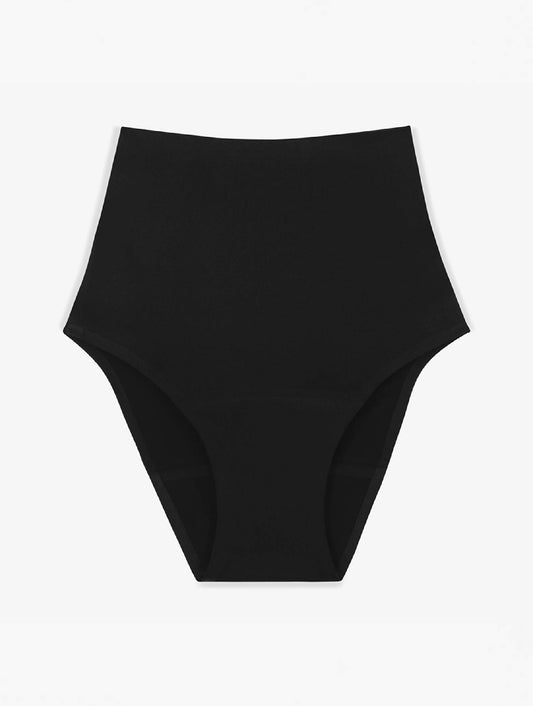
| Calliope, high-waisted shaping | Medium | 2 tampons | Up to 12 hours | 39 € |
| Aquilla, cotton | Heavy | 4 tampons | Day and night | 30 € |
| Artémis, microfiber | Heavy | 4 regular tampons or 2 super | Up to 12 hours | 39 € |
| Héméra, detachable | Heavy | 4 tampons | Up to 12 hours | 44 € |
| Hécate | Very heavy | 150 ml, equivalent to 6 tampons | Day and night without changing | 45 € |
Slide the table horizontally.


- To start with: Séléné, the best-selling and most versatile model in the range.
- For nights and days 1 and 2: Artémis, which absorbs double.
- For endometriosis or a copper IUD: Hécate, the only model with 150 ml capacity.
- For sensitive skin: Ara or Aquilla, made of GOTS-certified cotton and PFAS-free.
- For changing outside the home: Héméra, whose absorbent part detaches.
How a menstrual panty works
A menstrual panty is not just a panty lined with a pad. The absorption is integrated into the garment, with three superimposed layers in the central zone.
- The draining layer, in contact with the skin, lets the flow pass inside and stays dry. It is what eliminates the feeling of dampness.
- The absorbent layer retains the blood and neutralizes it, which prevents odors throughout the wearing time.
- The waterproof layer, on the outside, blocks passage to the clothes.
At Smoon, these three materials are assembled without seams, resulting in a thickness twice as thin as average and total invisibility under fitted clothing. The technology was developed in Paris over two years, with a textile engineer.
How long can it be worn
Between 8 and 12 hours depending on the models and the flow intensity, not according to a universal rule. The useful guideline: a panty should be changed when you feel discomfort, not at a fixed time. On the heaviest days, it is normal to change it once during the day, just like you would change a disposable protection.
How many panties are needed for one cycle
Three to five, depending on the length of your period and washing routine. Fewer than three means doing laundry every day. The most common combination is two very absorbent models and two medium ones.
Which cut to choose
The cut doesn’t affect absorption: for the same flow, a shorty and a thong of the same model protect equally well. However, it changes comfort and how the panty behaves under clothing.
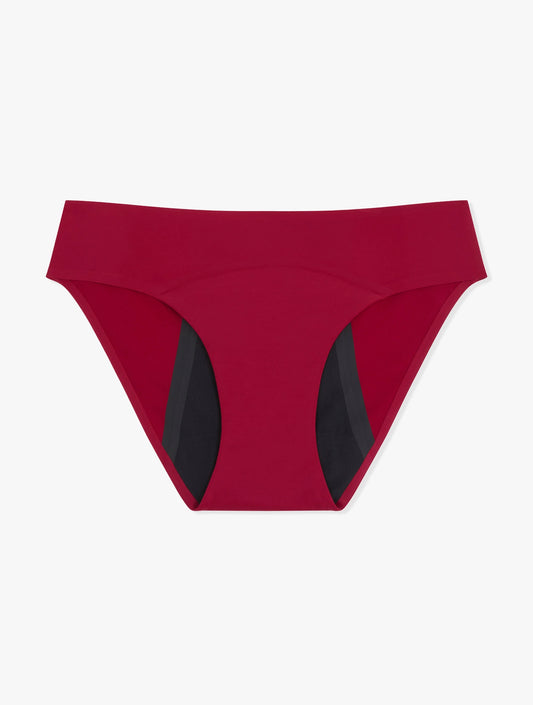
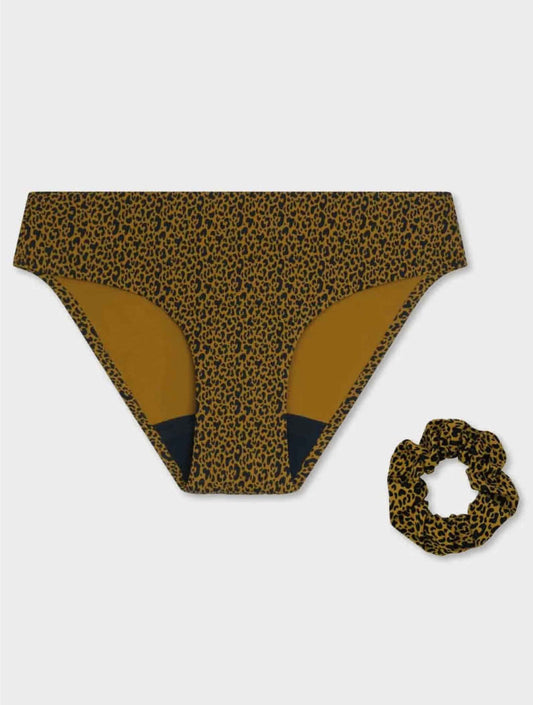
 Classic
The best compromise. Suitable for all flows and body types.
Classic
The best compromise. Suitable for all flows and body types.
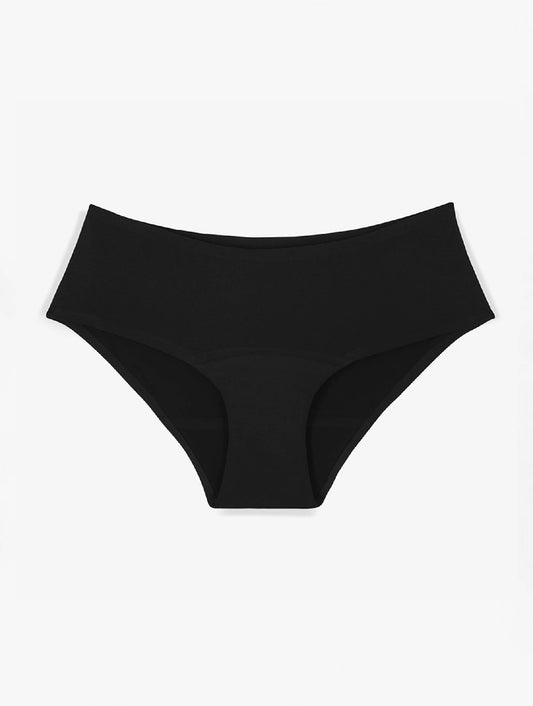
 Shorty
Covers more. Ideal for night, skirts, and to avoid thigh chafing.
Shorty
Covers more. Ideal for night, skirts, and to avoid thigh chafing.
 High waist
Supports the belly and rises above the navel. Reassuring on cramp days.
High waist
Supports the belly and rises above the navel. Reassuring on cramp days.
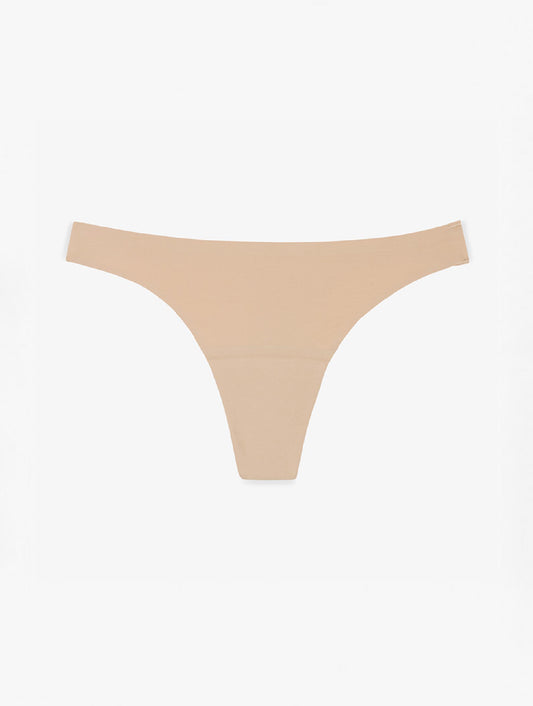
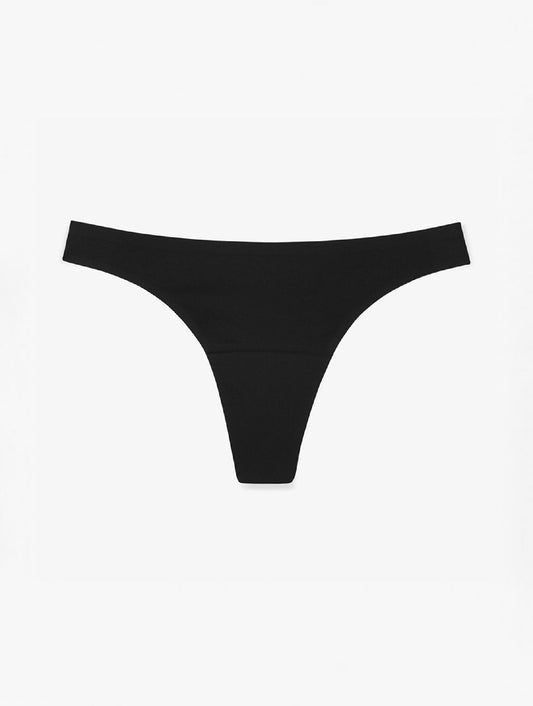
 String
Reserved for light flow, at the start or end of your period, or as a complement to a cup.
String
Reserved for light flow, at the start or end of your period, or as a complement to a cup.
If discretion is your top priority, check out the seamless models: the absence of topstitching on the edges eliminates visible lines under thin pants. For body types needing more comfort, the plus size menstrual panty better distributes support without compressing.
Organic cotton or microfiber: which to choose
This is the most frequently asked question, and the answer mainly depends on your skin and washing routine.
| GOTS certified cotton | Microfiber | |
|---|---|---|
| Touch | Soft, matte, close to classic underwear | Second skin effect, very thin |
| Sensitive skin | Recommended | Suitable, but less breathable |
| Discretion | Visible under very tight clothing | Invisible, twice as thin |
| Drying | Longer | Quick |
| Wearing duration | Up to 8 hours | Up to 12 hours |
| Entry price | 25 € | 35 € |
Slide the table horizontally.
The cotton Smoon models (Ara for medium flow, Aquilla for heavy flow) are GOTS certified, guaranteed PFAS-free, gynecologically tested, and validated by a clinical study. This is the most reassuring starting point for a first menstrual panty. The entire range is available in the cotton menstrual panty collection.
Menstrual panties for teens: what changes
Only two parameters distinguish panties for teenagers from adult models: the size chart, which starts around age 10, and the cut, adapted to a pelvis still developing. Absorption follows the same rules.
The real difficulty lies elsewhere: the body changes quickly, and panties bought at 11 often no longer fit at 13. This problem is solved by the One Size model, designed to fit ages 10 to 16 thanks to a memory foam thread, with protection up to 12 hours for a flow equivalent to 2 tampons.


For first periods, take two models rather than just one, including a shorty. Many teenagers prefer the shorty in middle school because it covers more and is less noticeable during sports class. Our article first periods: what to expect answers the most frequent questions.
Compare menstrual panties brands
The French market today includes several dozen brands, including Fempo, Réjeanne, Elia, Sisters Republic, Marguette, Modibodi, or Moodz. Rather than ranking them for you, here is the framework we ourselves would use to compare a brand we don’t know.
The 7 questions to ask before buying
- Is the absorption capacity quantified? In milliliters or tampon equivalent, product by product. A brand that remains vague on this point leaves you guessing.
- Is the certification number displayed? OEKO-TEX® STANDARD 100 without a verifiable number proves nothing.
- Does the composition mention PFAS? The absence of mention is not a guarantee of absence.
- Where is the product designed and manufactured? Design and manufacturing are two different things, and many brands only talk about the first.
- What is the return policy? Underwear needs to be tried on. Without the possibility of return or exchange, the risk is entirely yours.
- Is the size guide based on measurements? A direct correspondence with clothing sizes is a shortcut that causes leaks.
- How many customer reviews, and on which platform? A high volume on a verified platform is better than a perfect rating on ten reviews.
What Smoon puts on the table
Since we ask you to check others, here are our own answers, all verifiable on the site:
- French brand created in 2018 by Mathilde and Marine, products developed in Paris with a textile engineer.
- First menstrual panty brand to obtain B Corp certification, in 2023.
- OEKO-TEX® STANDARD 100 certification, numbers CQ 1285/1 and CQ 1285/2.
- Absorption figures on each product page, from the thong for 1 tampon to Hécate at 150 ml.
- 60 days to try, free exchanges, free delivery from €49 via Mondial Relay.
- Partnerships with the French Swimming Federation, the French Boxing Federation, Decathlon, and Kiprun.
- More than 800 customer reviews on the Séléné model alone.
The range goes beyond just panties: menstrual swimwear designed for swimming, menstrual leggings and shorts, postpartum lingerie, and panties for urinary leaks. This is what most clearly sets us apart from brands focused on a single product.
How much it costs, and when it becomes profitable
A menstrual panty costs between €25 and €45 depending on the model and material. The initial investment is therefore real: between €90 and €200 for a complete set of three to five panties.
The honest comparison is made over time. A well-maintained pair of panties can be used for several years, whereas disposable products need to be repurchased every month. The tipping point depends on your current consumption and the number of panties purchased. We detailed this calculation in our article on the price of hygiene products.
Two ways to reduce the initial cost: starter packs, which are cheaper than buying individually, and in some cases reimbursement by insurance, which few people think to ask for.
Care: how to make it last
It is care, more than initial quality, that determines the lifespan of a menstrual panty. Four rules are enough.
- Rinse with cold water immediately after wearing, without soap, until the water runs clear. Hot water sets the blood.
- Wash cold or at 30 °C, in the machine on a delicate cycle or by hand.
- No greasy soap, no fabric softener. They clog the absorbent membrane and irreversibly reduce its effectiveness. A splash of white vinegar in the rinse works very well.
- No tumble drying. Air dry only.
Our complete guide, how to care for your menstrual panty, details special cases, including stubborn stains.
Frequently asked questions
-
01What is the best menstrual panty?
One with an absorption capacity matching your flow. For a medium flow, aim for the equivalent of 2 tampons; for a heavy flow, 4 tampons; for a very heavy flow, 150 ml, or 6 tampons. A panty that is not absorbent enough will leak regardless of the brand, and one that is too absorbent will simply be thicker than necessary.
-
02How long can you wear a menstrual panty?
Between 8 and 12 hours depending on the model and flow intensity. Smoon microfiber models offer up to 12 hours of protection, cotton models up to 8 hours. On the heaviest days, plan to change during the day.
-
03How many menstrual panties do you need for one cycle?
Three to five. Fewer than three means you need to do laundry daily. The most practical setup combines two very absorbent models for the first days and two medium absorbency models for the rest.
-
04Which menstrual panties are suitable for a very heavy flow or endometriosis?
You need a model specifically designed for that, with a widened absorbent area raised at the front and back. The Hécate panty absorbs 150 ml, equivalent to 6 tampons, and was designed for women with copper IUDs or suffering from endometriosis. Other models in the range are found in the very heavy flow collection.
-
05Are menstrual panties really invisible under clothes?
It depends on the construction. Seamless models, with integrated absorption and no topstitching on the edges, leave no marks even under tight pants. Models with visible hems are more noticeable. Smoon microfiber panties are twice as thin as the market average.
-
06Organic cotton or microfiber: which material to choose?
GOTS-certified cotton for sensitive skin and a feel close to regular underwear. Microfiber for thinness, invisibility under tight clothes, quick drying, and longer wear time. Both protect equally well at the same absorption capacity.
-
07At what age can a teenager wear menstrual panties?
From the first period. Teen sizes start at age 10. It’s actually the easiest protection to adopt at the beginning, as it requires no internal manipulation. The One Size model covers ages 10 to 16, avoiding the need to buy new ones with every body change.
-
08How to wash menstrual panties?
Rinse them in cold water without soap immediately after wearing, until the water runs clear. Then wash in cold or at 30°C, either in the machine on a delicate cycle or by hand. Avoid greasy soap and fabric softener, which clog the absorbent membrane, and never put the panties in the dryer.