Ovulation symptoms: the signs that matter, and those that prove nothing
This article is for informational purposes and does not replace a medical consultation. It describes what authoritative medical sources establish about the signs of ovulation and clearly indicates what they do not establish.
Identifying ovulation is not a contraceptive method. Using it to avoid pregnancy requires a structured method and supervised training, which is an entirely different subject from recognizing a sign. And no bodily sign protects against sexually transmitted infections.
One-sided lower abdominal pain, sudden clear and stretchy discharge, breasts that feel tender. Somewhere around the middle of the cycle, the body sends signals, and the question quickly arises: is this ovulation, and can it really be recognized?
Yes, partly. Some ovulation symptoms are described by medical sources, with figures and mechanisms. Others circulate all over the web without ever appearing in an institutional source. And one point matters more than all the others: most of these signs can only be interpreted afterward, when ovulation has already occurred.
Here is the breakdown, based on Assurance Maladie and the MSD Manual: what each sign indicates, how long it lasts, how to distinguish it from something else, and what is needed to confirm ovulation for sure.
Ovulation does not occur on day 14 of the cycle. It occurs approximately 14 days before the next period, which is not at all the same thing.
- The ovulatory phase lasts 16 to 32 hours. It is the shortest of the cycle’s three phases.
- Three documented signs: cervical mucus becomes abundant, fluid, and stretchy; temperature rises by 0.2 to 0.5 °C; and luteinizing hormone surges 24 to 48 hours beforehand.
- Only one sign predicts ovulation: cervical mucus. Temperature confirms it afterward, once the fertile window has closed.
- Ovulation pain, or mittelschmerz, lasts from a few minutes to a few hours, occurs on the side of the affected ovary, and may be absent in some cycles.
- Ovulating without feeling anything is normal. Feeling something without ovulating is normal too: a sign suggests, but does not prove.
- The fertile window lasts about 6 days: sperm live for 3 to 5 days, while the egg can be fertilized for only 12 hours.
- Bleeding in the middle of the cycle is not included among the causes recognized by Assurance Maladie. It should be checked rather than explained away.
What is ovulation, and when does it occur?
A phase lasting 16 to 32 hours
The MSD Manual divides the menstrual cycle into three phases: “Follicular phase (before the release of the egg), Ovulatory phase (release of the egg), Luteal phase (after the release of the egg).” Ovulation is the second phase, and by far the shortest: “The ovulatory phase generally lasts between 16 and 32 hours.”
In practical terms, an ovary releases a mature egg, which travels into the fallopian tube. The ruptured follicle closes up and becomes the corpus luteum, which produces the progesterone of the luteal phase, which thickens the endometrium in preparation for implantation. If the terminology is unfamiliar, our glossary of the female reproductive system explains it clearly.
Why “day 14” is a poor reference point
This is the most persistent misconception, and it stems from a misunderstood average. Cycles “generally last between 24 and 38 days,” and the MSD Manual states about the follicular phase: “On average, the follicular phase lasts between 13 and 14 days. Of the three phases, this is the one whose duration varies the most.”
The luteal phase, for its part, “lasts about 14 days.” In other words, it is the beginning of the cycle that gets longer or shorter, not the end. The useful reference point is therefore not “day 14 of the cycle” but about 14 days before the next period. In a 32-day cycle, this places ovulation around day 18, not day 14. And if your cycles are irregular, the calculation no longer works at all, since it assumes that you know the date of your next period in advance.
| Phase | Duration | What happens during it |
|---|---|---|
| Follicular | 13 to 14 days on average | Follicle maturation. This is the phase that varies the most |
| Ovulatory | 16 to 32 hours | Release of the egg after the rise in luteinizing hormone |
| Luteal | Approximately 14 days | The corpus luteum produces progesterone until menstruation |
Swipe the table to the left to see all the columns.
Ovulation symptoms, one by one
The three documented signs
Cervical mucus. This is the only sign that anticipates ovulation. The French national health insurance website describes it as follows: “Around ovulation, the mucus is abundant, fluid, and stretchy, allowing sperm to pass through.” It changes in appearance before the egg is released, making it the most useful everyday indicator. Its complete evolution throughout the cycle is detailed in our article on cervical mucus.
Body temperature. It rises after ovulation, not before. The French national health insurance website refers to “a slight rise in temperature that occurs from ovulation onward (0.2 to 0.5 °C).” The MSD Manual explains the mechanism: progesterone produced by the corpus luteum causes “a slight rise in basal body temperature during the luteal phase, which continues until menstruation begins.”
Luteinizing hormone. Invisible to the naked eye, but measurable in urine. According to the French national health insurance website, “it rises sharply in the 24 to 48 hours before ovulation.” The MSD Manual specifies that the egg is released “approximately 10 to 12 hours after the rise in luteinizing hormone levels.”
The signs we feel
Lower abdominal pain. It has a name, mittelschmerz, and an entire section farther down.
Tender breasts. The MSD Manual explains this through cycle hormones: “Rising estrogen and progesterone levels cause the milk ducts in the breasts to dilate. The breasts can therefore swell and become painful.” This is a cycle-wide phenomenon, more pronounced in the second half, and not a marker of ovulation itself. When it becomes bothersome, it is called hormonal mastodynia.
What official sources do not say
It is worth being direct, because this is rarely written elsewhere. The libido peak, more acute sense of smell, brighter skin, improved mood, cervix rising and softening, and the famous ovulation spotting: none of this appears on the French national health insurance website or in the MSD Manual we consulted for this article.
This does not mean that these sensations are imaginary. Many women describe them, and lived experience does not need a publication to exist. Libido varies throughout the cycle, including during menstruation, but none of the sources consulted considers it a marker of ovulation. This means that they have not been established as reliable signs of ovulation, and that you should therefore not base a pregnancy plan—or, above all, contraception—on them.
| Sign | When | What it indicates | Documented |
|---|---|---|---|
| Abundant, stretchy cervical mucus | Before | Ovulation is approaching | Assurance Maladie |
| LH surge | 24 to 48 hours before | Ovulation is imminent | Assurance Maladie, MSD |
| Temperature +0.2 to 0.5 °C | After | Ovulation has occurred | Assurance Maladie, MSD |
| One-sided pain | Around | Suggests an ovulatory cycle | MSD |
| Tender breasts | Mostly after | Hormonal effect of the cycle | MSD |
| Libido, sense of smell, mood | Variable | Nothing proven | Not found |
Swipe the table to the left to see all the columns.
Mid-cycle pain, or mittelschmerz
What it feels like
The MSD Manual describes it in a few lines that are more valuable than many articles: “Around ovulation, some women experience a dull pain in the lower abdomen. This pain is known as mittelschmerz (literally, middle pain). The pain may last from a few minutes to a few hours, which is normal. It is generally felt on the side of the ovary that releases the egg.”
Three things to remember from this paragraph. It is one-sided, on the right or left depending on which ovary is active that month. It is brief, lasting from a few minutes to a few hours, not several days. And it is dull, not sudden and stabbing.
Where it comes from
Honestly, we do not know. The MSD Manual states it plainly: “The precise cause of this pain is unknown, but it is probably caused by the growth of the follicle or the release of a few drops of blood during ovulation. It may precede or follow the rupture of the follicle.”
This is also why it is not a precise reference point: it can occur either before or after the egg is released. Feeling the pain does not tell you whether the fertile window is opening or closing.
When it requires medical attention
The mittelschmerz described by the MSD Manual is dull, one-sided, and brief. Seek medical advice if your pain does not match this description:
- It lasts several days or returns every day of the cycle.
- It is severe, sudden, or doubles you over.
- It is accompanied by fever, vomiting, or feeling unwell.
- It occurs during intercourse or gets worse from cycle to cycle.
- It is accompanied by bleeding that is not your period.
Cyclical, disabling pelvic pain may be due to endometriosis, which still takes too long to diagnose in France. In the event of sudden, severe pain, call 15, available 24 hours a day.
How long do ovulation symptoms last?
The actual timeline
This is the most frequently asked question, and the answer fits in one sentence: each sign has its own duration, and none covers the entire fertile window.
| Sign | How long | What explains this duration |
|---|---|---|
| Thin, stretchy cervical mucus | Several days | It changes as ovulation approaches; Assurance Maladie counts up to 4 days after it first appears |
| LH surge | 24 to 48 hours | The hormonal surge that triggers the release of the egg |
| Ovulatory phase | 16 to 32 hours | The release of the egg itself |
| Ovulation pain | A few minutes to a few hours | Follicle growth or a few drops of blood, exact cause unknown |
| Elevated temperature | Until your period | The progesterone from the corpus luteum keeps it elevated throughout the luteal phase |
Swipe the table to the left to see all the columns.
Why some signs arrive too late to be useful
This is the point that tracking apps often fail to mention. Your temperature rises from ovulation onward. When the curve starts to rise, the egg has already been released, and it is fertile for only twelve hours. In other words, a temperature chart tells you that you have ovulated, never that you are going to ovulate.
Only two signs give advance notice: cervical mucus, which becomes thin and stretchy beforehand, and the LH surge, measurable 24 to 48 hours beforehand. Everything else is a retrospective observation. This is precisely why the symptothermal method combines two indicators instead of one.
Ovulation or something else: telling the difference
Ovulation pain or period pain
The two occur at different times and have different characteristics. Ovulation pain occurs in the middle of the cycle, on one side only, and lasts no more than a few hours. Period pain starts with the bleeding, is usually centered, feels cramp-like, and lasts one to three days. Pain that fits both descriptions, or neither, should be described to a doctor rather than self-classified. It should also not be confused with premenstrual syndrome, which occurs in the days before your period, about a week after ovulation.
Bleeding in the middle of the cycle is not a symptom of ovulation
“Ovulation spotting” is everywhere on the web, presented as a normal variation. We did not find it in any French institutional source. Assurance Maladie, on its page about the causes of bleeding between periods, lists hormonal imbalance, gynecological infection, uterine polyps and fibroids, and cancer or a lesion of the cervix. Normal ovulation does not appear on this list.
The only documented link is indirect: the MSD Manual mentions “the release of a few drops of blood during ovulation” as a possible cause of mittelschmerz, not as visible bleeding in underwear.
The sensible approach is therefore the opposite of what is often read elsewhere: bleeding outside your period should be checked rather than explained away, even if it is light, isolated, or occurs exactly in the middle of the cycle. Our article on spotting explains what may be behind it, while the article on bleeding outside your period covers situations that should not be left unattended.
Ovulation mucus or abnormal discharge
Ovulation mucus is clear, fluid, stretchy, and odorless. Discharge that changes color, becomes lumpy, smells bad, or is accompanied by burning and itching is no longer related to the cycle but requires a medical consultation. The difference between the two is explained in detail in our article on white discharge.
Can you ovulate without feeling anything
Yes, and it’s common
The MSD Manual is explicit about ovulation pain: it “may be absent in some cycles.” Not only absent in some women, but absent from one cycle to another in the same person.
The same applies to everything else. Feeling nothing does not mean you are not ovulating. A perfectly normal ovulation can occur without pain, breast tenderness, or anything identifiable, and the only sign may be a temperature rise a few days later, provided you measure it.
And the reverse is also true
Feeling something does not prove that ovulation occurred either. The MSD Manual lists mid-cycle cramps among the symptoms that suggest ovulatory cycles. Suggest, not demonstrate. One-sided pain may have another cause, and a surge in cervical mucus can occur without the follicle rupturing.
That is the whole difference between an indication and proof, which is why the following section exists.
Confirming ovulation: what proves what
LH urine tests
They are the only consumer tools that provide advance notice. The MSD Manual describes how they work: “This kit detects an increase in the level of luteinizing hormone in urine within the 24 to 36 hours preceding ovulation.”
Their limitation is logical: they detect the starting signal, not the outcome. A positive test indicates that ovulation is likely within one or two days; it does not certify that it has occurred.
Temperature chart
It confirms ovulation, but only afterward, and the MSD Manual does not mince words: “A decrease in basal body temperature indicates imminent ovulation,” followed by “an increase in temperature of more than 0.5°C generally indicates that ovulation has occurred.” Verdict on the method: “this method is time-consuming and is neither reliable nor accurate.”
This judgment concerns using temperature alone. Combined with cervical mucus and governed by precise rules, it becomes one of the two pillars of symptothermal method, which is a structured method rather than an ongoing observation.
Progesterone testing and ultrasound
These are the two medical methods, and the only ones that provide a definitive answer. Regarding the blood test, “a clear increase in progesterone levels or its metabolites indicates that ovulation has occurred.” It is performed during the second half of the cycle. As for ultrasound, it enables the doctor to “accurately determine whether or not ovulation has occurred.”
Cycle-tracking apps
Two uses must be distinguished. An app that records your daily observations is a practical journal. An app that predicts your ovulation based on your previous cycles calculates it from the calendar, using a follicular phase that the MSD Manual says is precisely the most variable of the three. This topic is discussed in our articles on cycle-tracking apps and on the real value of using an app to monitor your cycle.
| Method | Predicts or confirms | What it establishes | Its limitation |
|---|---|---|---|
| Urinary LH test | Predicts 24 to 36 hours in advance | Ovulation likely within 1 to 2 days | Does not confirm that it has occurred |
| Cervical mucus observation | Predicts | Ovulation is approaching | Requires training, sensitive to infections |
| Temperature chart | Confirms | Ovulation has occurred | “Neither reliable nor accurate” when used alone |
| Progesterone test | Confirms | Ovulation has occurred | Blood test, with a prescription |
| Ultrasound | Both | Whether ovulation occurs or not, with precision | Dedicated medical consultation |
| Predictive application | Predicted | Nothing physiological | Calculation based on the most variable phase of the cycle |
Swipe the table to the left to see all the columns.
Ovulation and fertility: the six-day window
Why six days, not one
The MSD Manual sets the framework: “In each cycle, pregnancy can occur during a period of approximately 6 days (the fertile window).” Six days, when the egg lives only a few hours, may seem contradictory. The calculation comes from the two gametes.
The window therefore opens several days before ovulation and closes very quickly afterward. This imbalance explains why retrospective signs—especially temperature—come too late to be of any use in the current cycle.
The intercourse that matters
When trying to conceive, it is therefore not intercourse on the “day of ovulation” calculated from a theoretical cycle that matters, but intercourse on the days when cervical mucus is abundant, fluid, and stretchy. This is the only sign that gives sufficient advance warning, along with an LH test.
And no, you do not become pregnant “only in the middle of the cycle”: with a short cycle and sperm that survive for five days, the question of getting pregnant during your period is not absurd at all.
What ovulation does not tell you about fertility
Detecting ovulation proves that it is taking place. It says nothing about the patency of the fallopian tubes, ovarian reserve, endometrial quality, or the partner’s sperm. A fertility assessment is based on hormone tests, an ultrasound, and a semen analysis—not on a temperature chart. If plans for pregnancy do not come to fruition, seek a medical consultation rather than buying another test at a pharmacy.
When the signs are missing
Irregular cycles and absence of ovulation
Signs of ovulation imply that ovulation is taking place. When cycles remain disrupted over time, sometimes ovulation itself is absent. The MSD Manual identifies the main culprit: “The most common cause of chronic ovulation problems is polycystic ovary syndrome, which generally causes irregular periods.”
Other factors affect the cycle without stopping it, from stress to the many factors that influence menstrual flow. A sustained absence of periods has a name, amenorrhea, and should be investigated during a consultation.
Situations in which these indicators are of no use
The French national health insurance service notes that methods based on cycle observation “are not recommended as menopause approaches or for adolescents whose cycles are irregular,” and that they require regular cycles.
Hormonal contraception must also be taken into account. The French national health insurance service states that these methods “contain synthetic hormones that generally block ovulation.” Looking for ovulation symptoms while taking the combined pill therefore makes no sense: what is being observed is related to something other than an ovulatory cycle.
- Adolescence: cycles often take months to become regular.
- Perimenopause: cycles become unpredictable, with inconsistent ovulation.
- After giving birth: until cycles return, there is nothing to observe.
- When using hormonal contraception that suppresses ovulation: there are no ovulatory signs to look for.
- During a vaginal infection: the appearance of the discharge changes, making observation of cervical mucus impossible to interpret.
Going about your daily life during ovulation
Heavy cervical mucus: the real practical issue
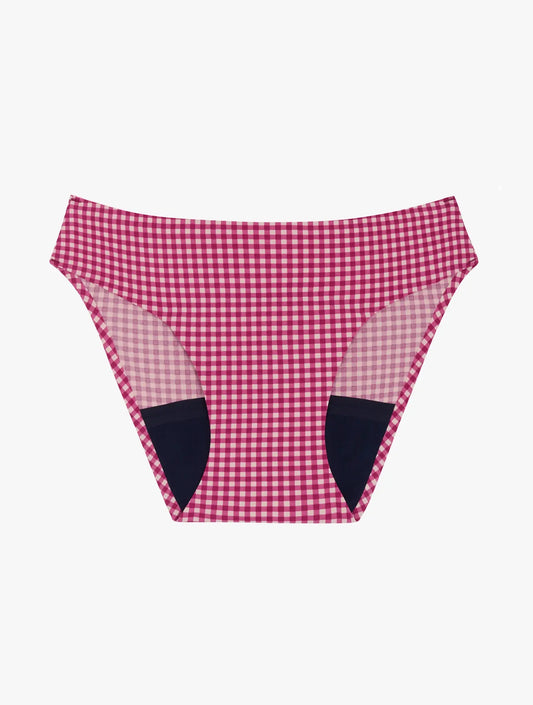
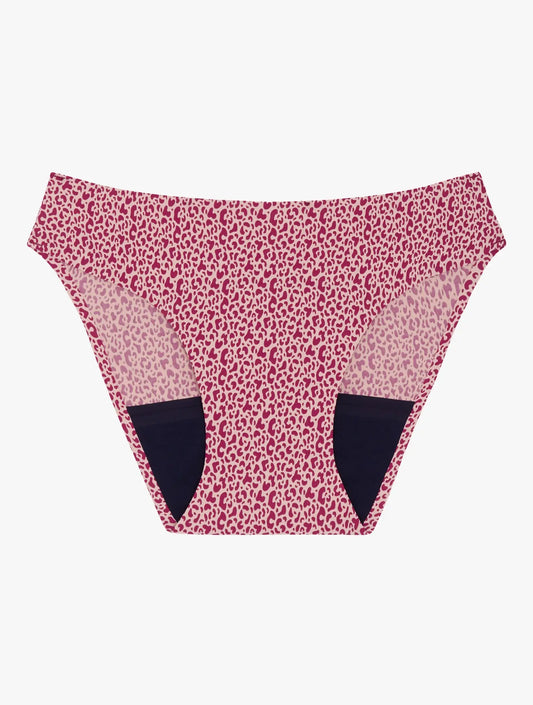
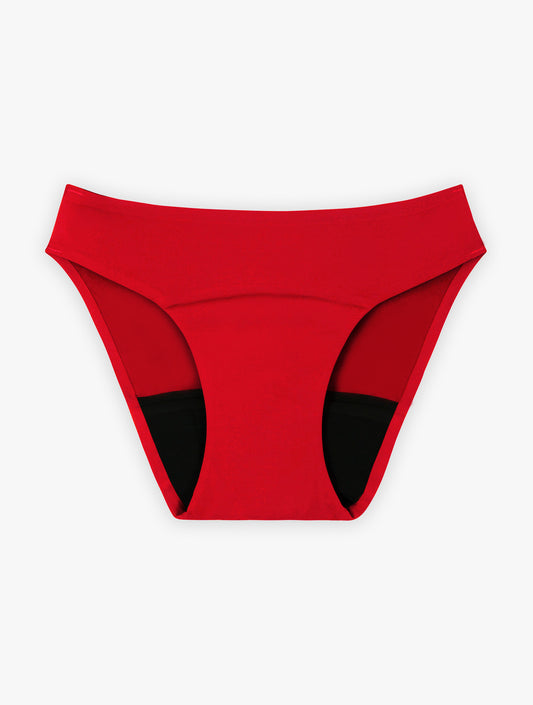
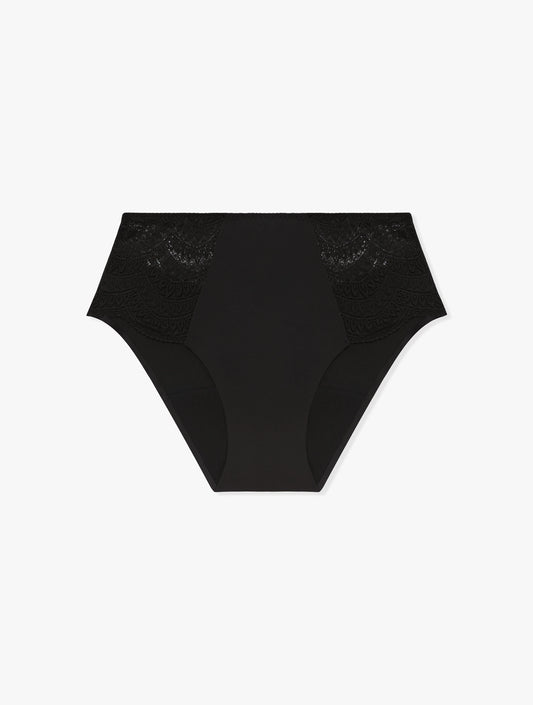
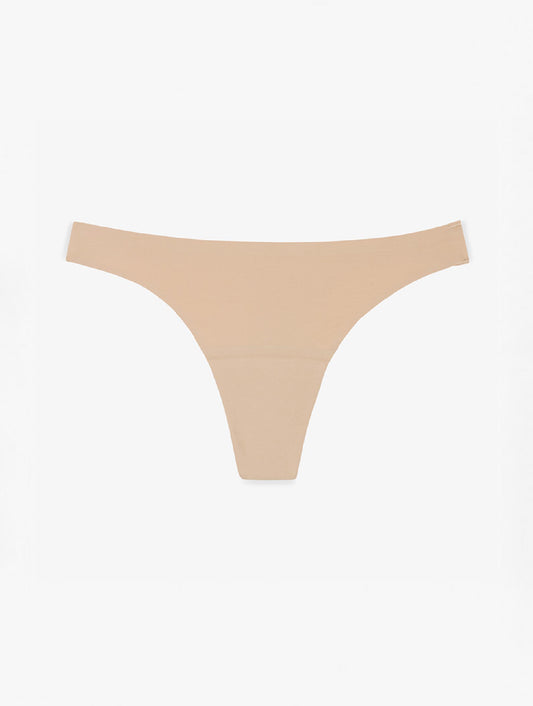
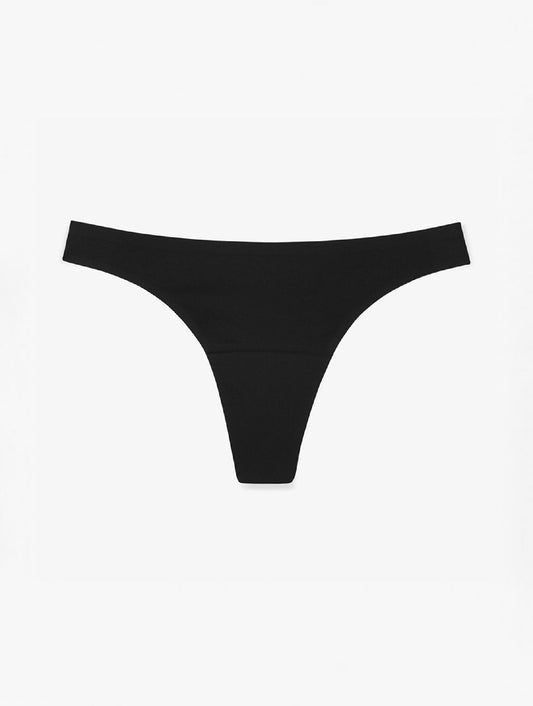
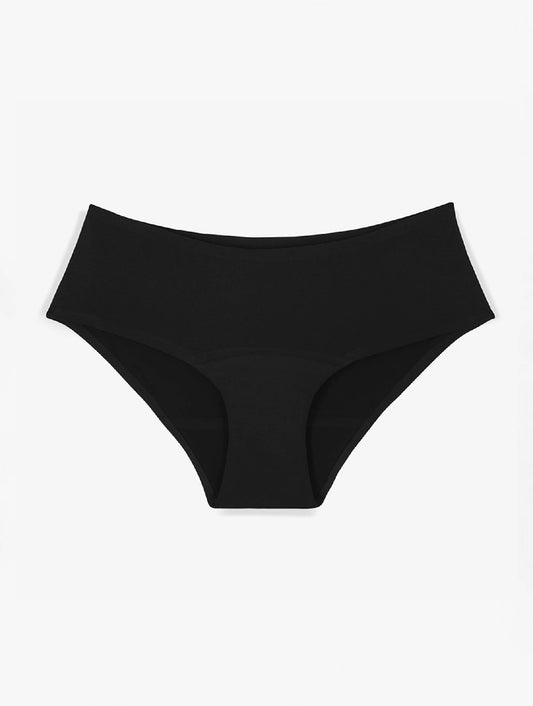
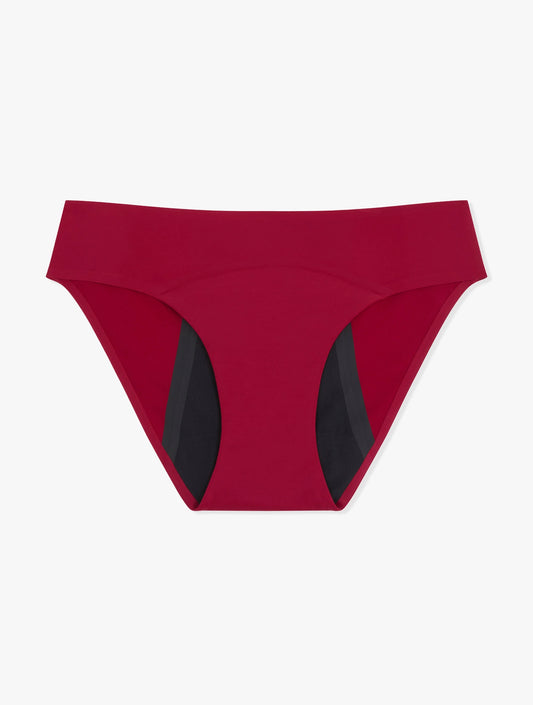
We often talk about cervical mucus as an indicator to decode, rarely as what it also is: an amount of discharge that increases significantly for a few days. The French national health insurance service describes cervical mucus as “abundant, fluid, and stretchy,” and abundant means exactly what it says. Many women change their underwear in the middle of the day at this point in the cycle, or avoid certain fabrics.
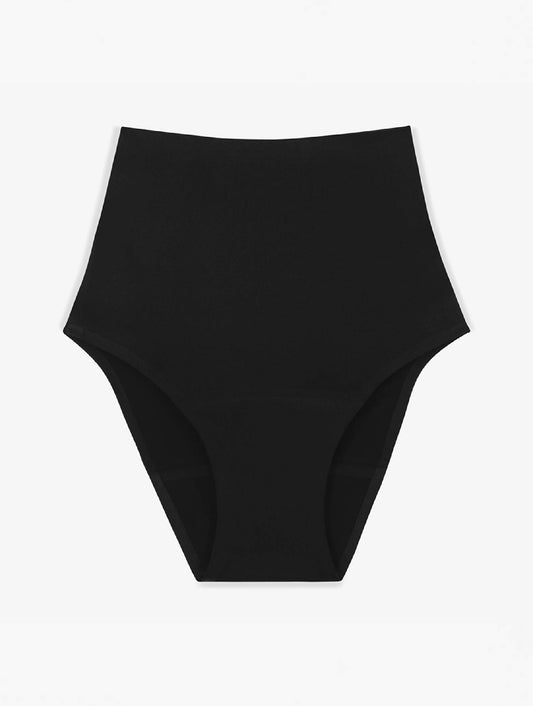
It is a common discomfort, never a medical problem in itself, and it can be addressed with suitable underwear rather than anything else. By contrast, discharge that changes color, smell, or texture calls for a consultation, not thicker protection.
What changes in practical terms
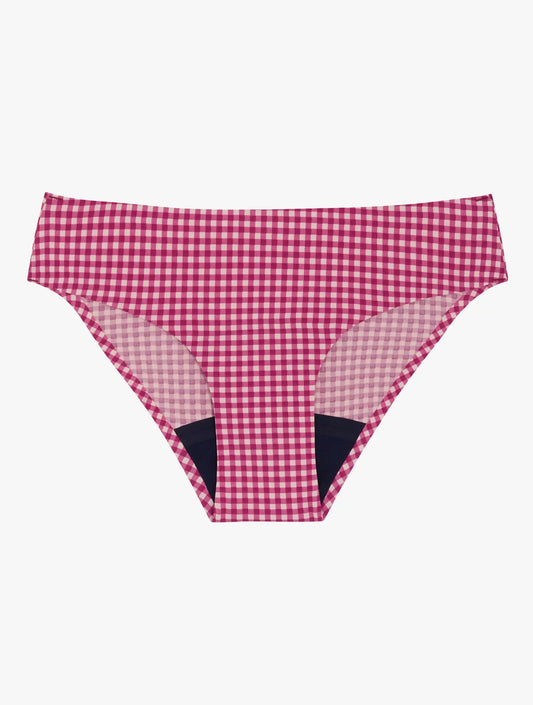
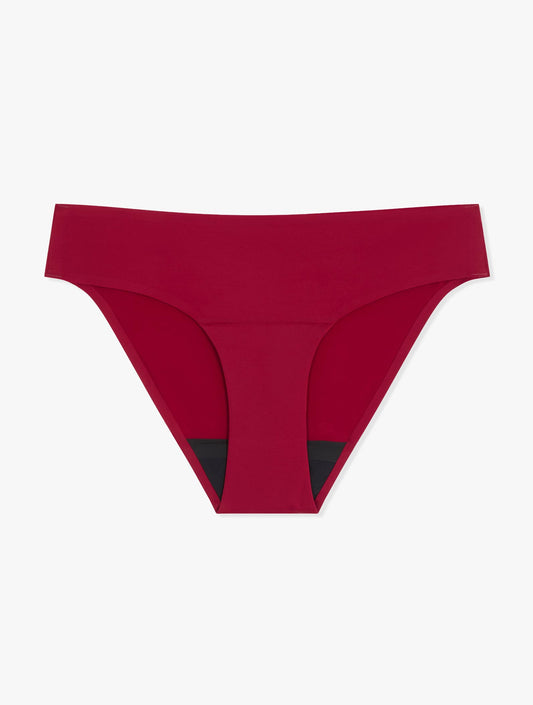
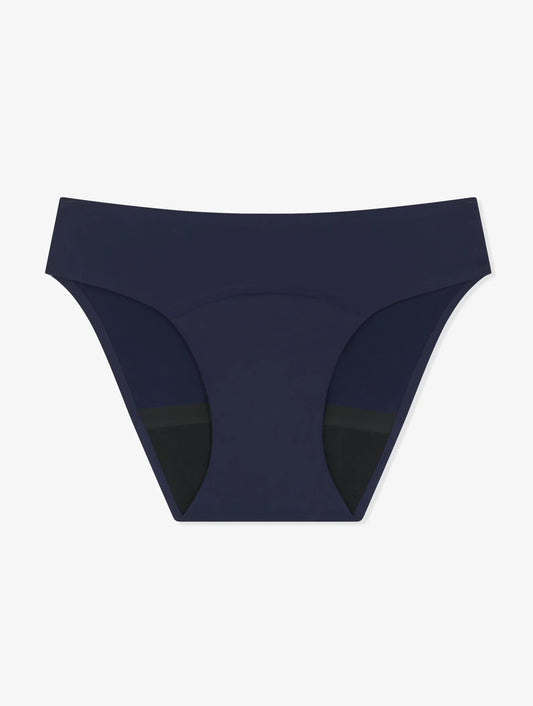
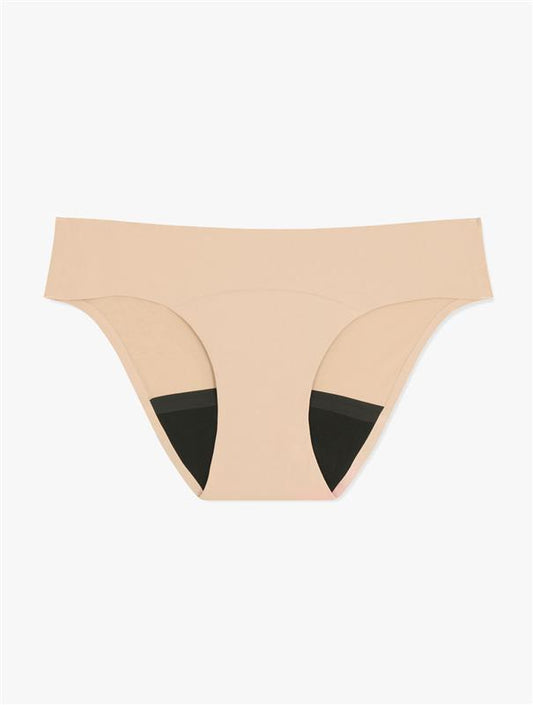
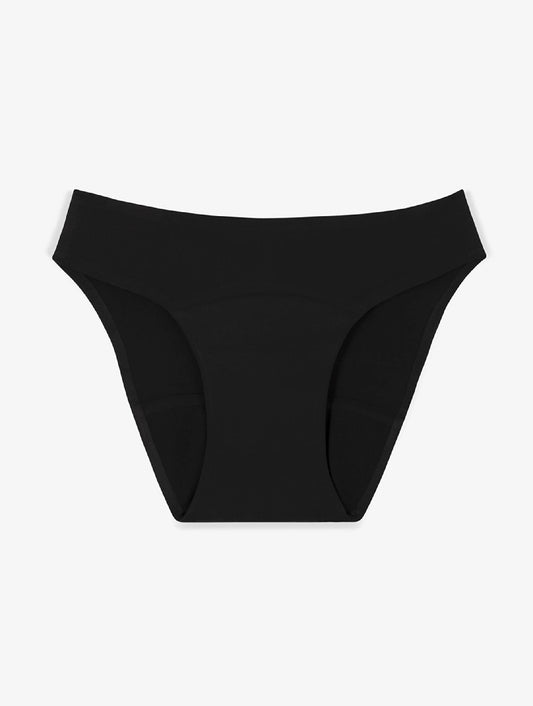
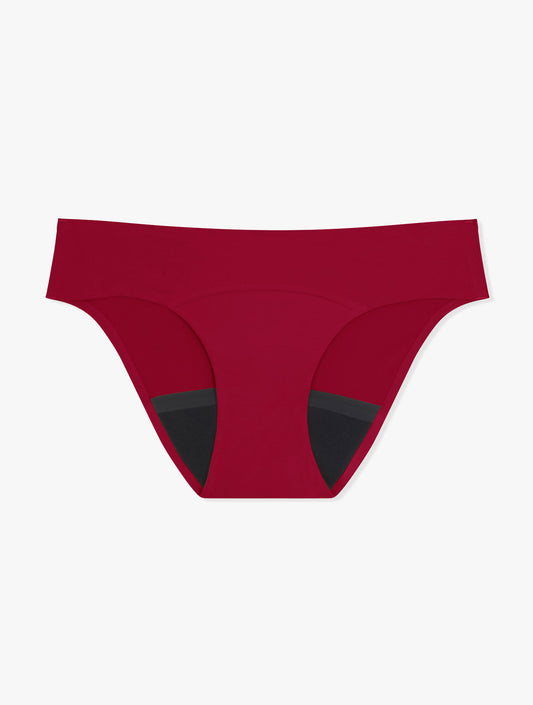
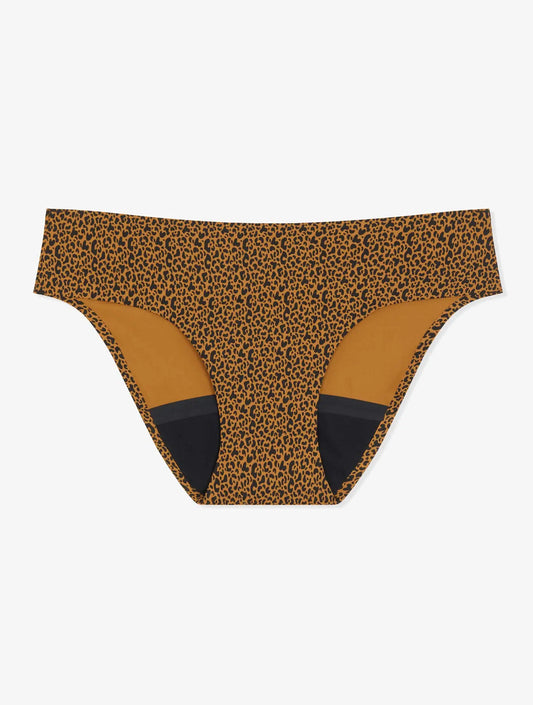
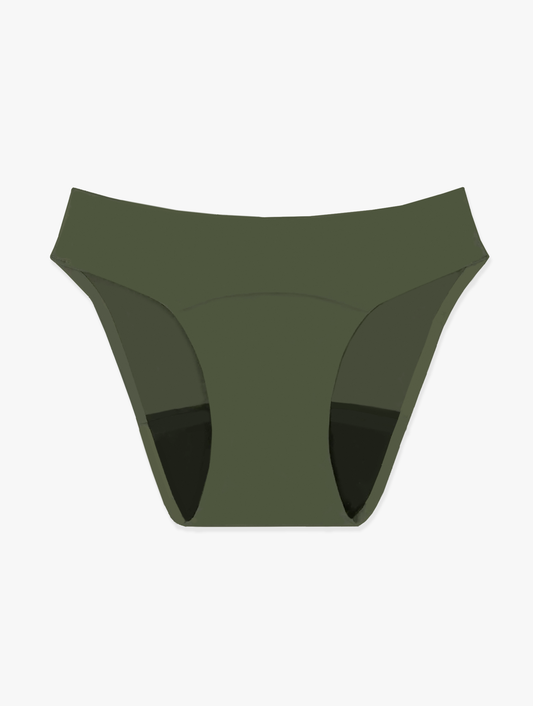
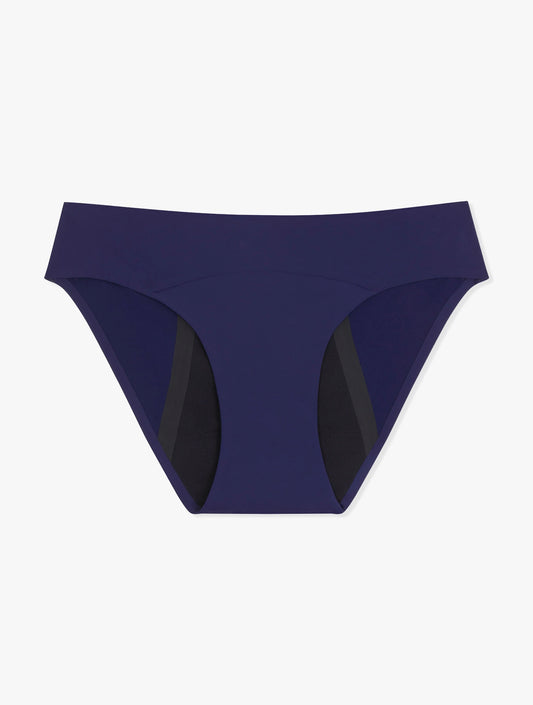
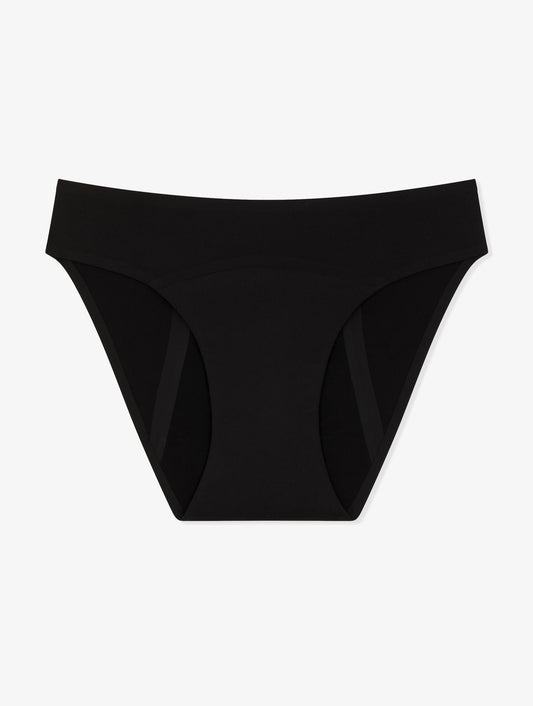
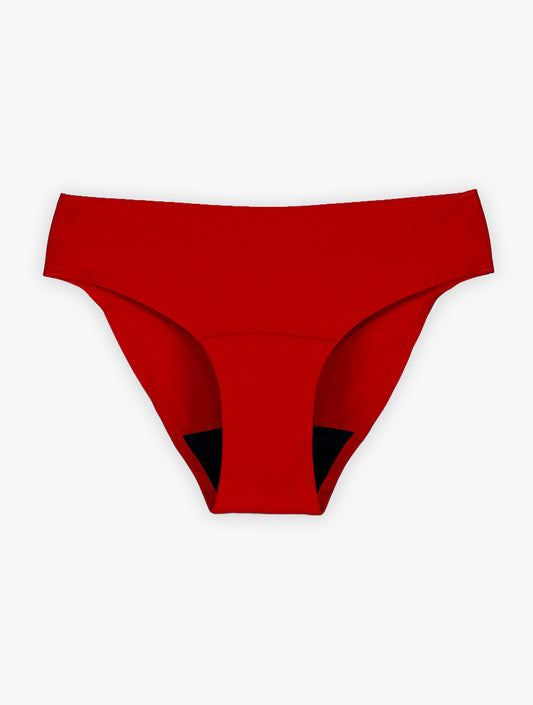
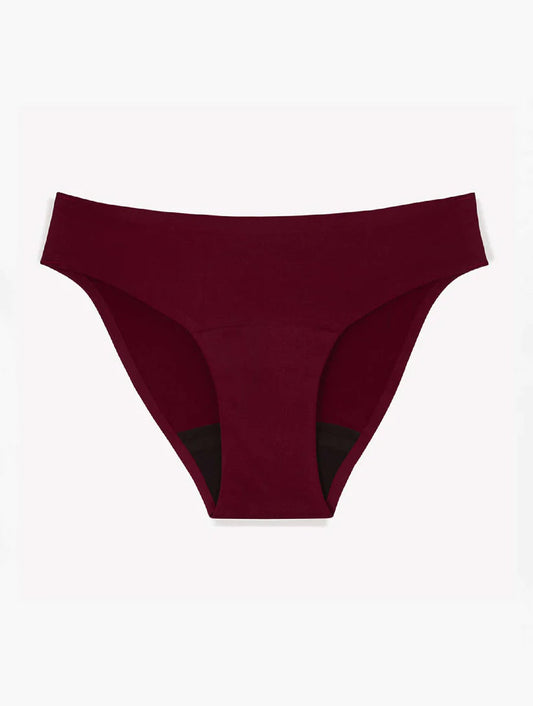
- Built-in absorbent material instead of a disposable panty liner that needs changing several times a day.
- Cotton against the skin, for days when discharge is heavy.
- An invisible cut, because these days fall right in the middle of the month, not during your period, when you already adapt your outfit.
- Rinse with cold water after wearing, then machine wash at 30 °C, without fabric softener. The medium-flow styles take over when your period arrives.


It does not alter your cycle, ovulation, or fertility. It does not detect anything and does not replace any examination. It is an absorbent undergarment, useful for comfort on days when discharge increases, and nothing more. Any discharge that is unusual in color, smell, or texture should be shown to a doctor.
Frequently asked questions about ovulation symptoms
-
01What are the symptoms of ovulation?
Three signs are documented by authoritative medical sources. According to Assurance Maladie, cervical mucus becomes abundant, fluid, and stretchy around ovulation. Body temperature rises by 0.2 to 0.5 °C from ovulation onward. And luteinizing hormone surges in the 24 to 48 hours beforehand. Two sensations may also occur: a dull lower-abdominal pain called mittelschmerz, and swollen or sore breasts linked to cycle hormones. By contrast, increased libido, a sharper sense of smell, or an elevated mood, often mentioned elsewhere, do not appear on the Assurance Maladie or MSD Manual pages consulted.
-
02When does ovulation occur in the cycle?
Not on the 14th day of the cycle, contrary to popular belief. The MSD Manual states that the follicular phase lasts 13 to 14 days on average and that, of the three phases, it is the one whose duration varies the most, while the luteal phase lasts about 14 days. The reliable reference point is therefore approximately 14 days before the next period, not 14 days after the previous one. In a 32-day cycle, ovulation occurs around day 18. Cycles generally last between 24 and 38 days, and ovulation itself lasts between 16 and 32 hours.
-
03How long do ovulation symptoms last?
Each sign has its own duration. According to the MSD Manual, ovulation pain lasts from a few minutes to several hours. The luteinizing hormone surge occurs over 24 to 48 hours before ovulation. Thin, stretchy cervical mucus remains for several days, with Assurance Maladie counting up to 4 days after it first appears. The ovulatory phase lasts 16 to 32 hours. As for the rise in temperature, it lasts until menstruation begins, meaning throughout the luteal phase. No single sign covers the entire fertile window.
-
04What does ovulation pain feel like?
The MSD Manual describes it as follows: a dull pain in the lower abdomen, known as mittelschmerz, which may last from a few minutes to several hours, which is normal, and is generally felt on the side of the ovary releasing the egg. Its precise cause is unknown, but it is probably related to follicle growth or the release of a few drops of blood during ovulation, and it may occur before or after the follicle ruptures. Pain that lasts several days, is severe, or is accompanied by fever or bleeding does not match this description and should be evaluated by a doctor.
-
05Can you ovulate without experiencing any symptoms?
Yes, and it is common. The MSD Manual states that ovulation pain may be absent in some cycles, including in women who usually experience it. Feeling nothing therefore does not mean that ovulation has not occurred. The reverse is also true: feeling something does not prove that ovulation has occurred. The MSD Manual lists mid-cycle cramps among the symptoms that suggest ovulatory cycles, which is not proof. Only a progesterone test or an ultrasound can provide a definitive answer.
-
06How can you know for certain that you have ovulated?
Through a medical examination. The MSD Manual indicates that a clear increase in progesterone or its metabolites, measured by a blood test during the second half of the cycle, shows that ovulation has occurred. Ultrasound allows the doctor to determine precisely whether ovulation has occurred. The temperature chart provides an indication: a rise of more than 0.5 °C generally signals that ovulation has occurred, but the MSD Manual considers this method time-consuming and neither reliable nor accurate when used alone.
-
07Is spotting a symptom of ovulation?
This is not what French institutional sources indicate. On its page about the causes of bleeding between periods, Assurance Maladie lists hormonal imbalance, gynecological infection, uterine polyps and fibroids, and cancer or a lesion of the cervix. Normal ovulation is not included. The only documented link is indirect: the MSD Manual mentions the release of a few drops of blood during ovulation as a possible cause of mid-cycle pain, not as visible bleeding. Bleeding outside your period, even if light and even mid-cycle, should therefore be checked by a doctor rather than attributed to ovulation.
-
08How many days does the fertile period around ovulation last?
About six days. The MSD Manual states that in each cycle, pregnancy can occur during a period of about 6 days called the fertile window. This figure is explained by the lifespan of the two gametes: sperm live for 3 to 5 days, whereas an egg can be fertilized only during the 12 hours after it is released. The window therefore opens several days before ovulation and closes very quickly afterward, making retrospective signs such as basal temperature useless for the current cycle.
-
09Are ovulation tests from pharmacies reliable?
They do measure what they claim to measure, but not what many people think. The MSD Manual explains that the kit detects a rise in luteinizing hormone levels in the urine within the 24 to 36 hours before ovulation. A positive test therefore signals probable ovulation within one to two days, making it the only consumer tool that provides advance warning. However, it does not confirm that ovulation actually occurred: a surge in luteinizing hormone can occur without the follicle rupturing. For confirmation, a progesterone test or an ultrasound is required.
-
10Can you detect ovulation while taking the pill?
No, and the reason is simple. Assurance Maladie states that hormonal contraceptive methods contain synthetic hormones that generally block ovulation. Looking for ovulation symptoms in this context makes no sense, since what is observed is related to something other than an ovulatory cycle. Assurance Maladie also points out that methods based on cycle observation are not recommended as menopause approaches or for adolescents whose cycles are irregular, and that they require regular cycles.
- MSD Manual, consumer version, The menstrual cycle, cycle length and the duration of its three phases, variability of the follicular phase, mittelschmerz, breasts, basal temperature, fertile window, lifespan of gametes.
- MSD Manual, consumer version, Infertility problems related to ovulation, urinary LH test kits, limitations of temperature charts, progesterone testing, ultrasound, polycystic ovary syndrome.
- Assurance Maladie, Natural contraception methods, a temperature increase of 0.2 to 0.5 °C, the appearance of cervical mucus around ovulation, a rise in luteinizing hormone 24 to 48 hours beforehand, and situations in which these indicators are unreliable.
- Assurance Maladie, Bleeding between periods or very heavy periods: what are the causes?, list of the recognized causes, which does not include normal ovulation.
- Assurance Maladie, Hormonal contraception: pill, patch, vaginal ring, implant, intramuscular injection, ovulation blocked by synthetic hormones.