BLACK PERIODS: IS IT SERIOUS?
But what exactly is this black blood at the bottom of my menstrual panties? You may have asked yourself this question and perhaps even worried.
However, generally, what is called black periods or brown discharges is not dangerous as long as they are not accompanied by other symptoms, such as pelvic pain or foul odor. Black periods, we explain what the dark color of your menstruation signals.
BLACK PERIODS: WHY BLACK BLOOD?
Black periods, also called brown or dark brown discharges, are in most cases a mixture of:
- blood
- clots
- and vaginal secretions.
Their color, ranging from dark burgundy to black through brown, is explained by blood oxidation.
In short, when blood comes into contact with air, it oxidizes and darkens. This happens when menstrual blood from the uterus stagnates in the vagina before flowing out.
The result at the bottom of the panties? Black periods are sticky, dark discharges with a blood smell, but not unpleasant.
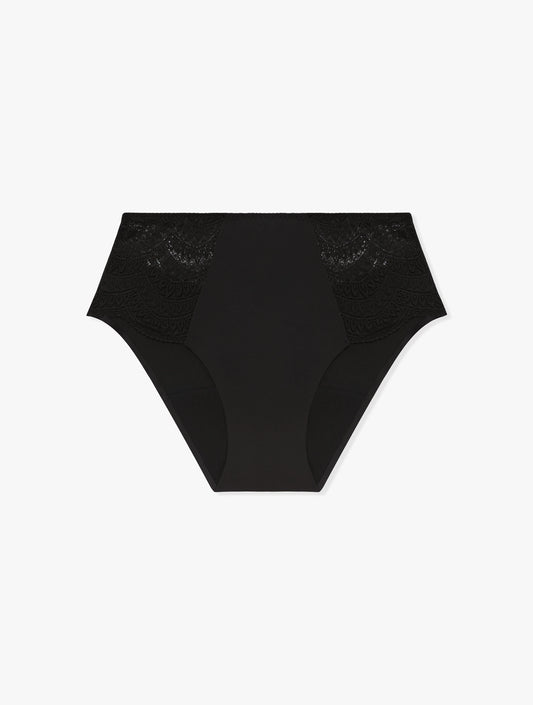
Menstrual panties: highly effective against black periods
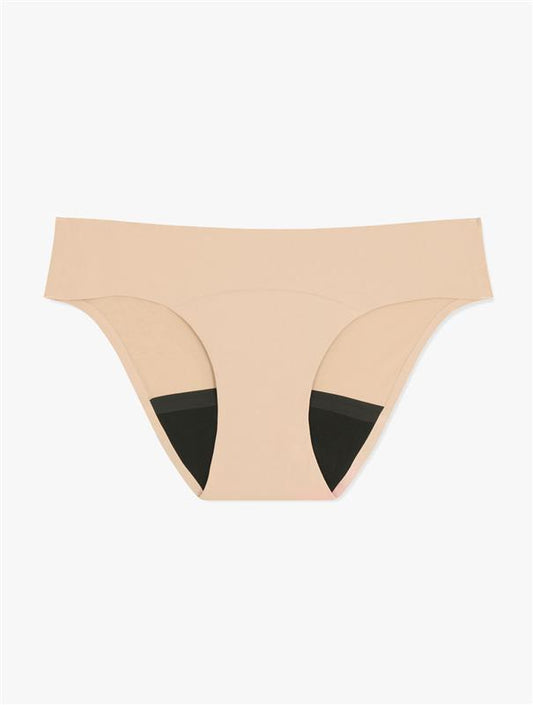
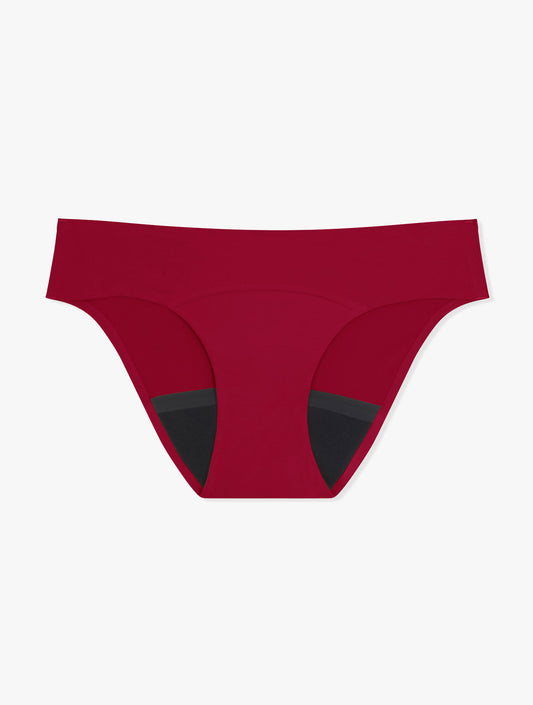
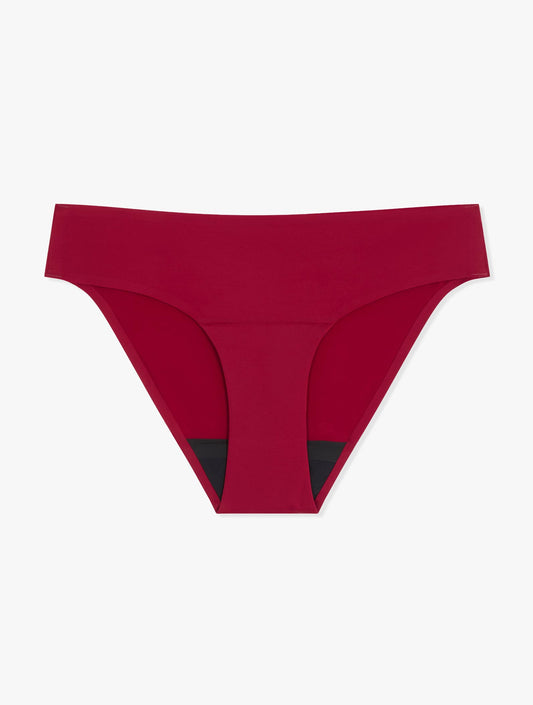
Smoon menstrual panties offer a practical and effective solution for managing black periods. These panties can absorb up to 20 ml of flow, equivalent to two tampons.
This performance is due to their unique design, made of three technical fabrics: a draining one, an absorbent one, and a waterproof and breathable one.
- The presence of a menstrual membrane in these panties ensures optimal protection during black periods, preventing leaks and providing comfort throughout the day.
- Ideal for medium to very heavy flows and therefore for black periods, these panties can be worn for 12 hours without risk of leakage.
- Moreover, they are invisible under clothing, providing complete discretion.
Smoon menstrual panties prove to be a great ally for managing black periods, offering effective protection and optimal comfort.












Black periods: where do they come from?
Black periods can occur in different situations. The most common are:
- the first and last days of the period especially when the blood flow is light and tends to linger in the vagina;
- the ovulation period during which many women's bodies undergo significant hormonal fluctuations (luteinizing hormone, progesterone, estrogen…). This is called ovulation spotting;
- appropriate hormonal contraception such as a poorly dosed pill causing slight bleeding during the menstrual cycle;
- inflammation of the cervix;
- stress.
If you are not used to it, dark periods can be worrying. But rest assured, in most cases they pose no danger. They are common and should not alarm you.
Dark periods and black discharge: what is the difference?
Dark periods and black discharge are often confused because they are both characterized by a dark color, resulting from blood oxidation. However, there is an essential difference between the two.
Dark periods usually occur during the menstrual cycle, at the beginning or end, when the blood flow is low and the blood has time to oxidize before being expelled.
On the other hand, black discharge can occur at any time during the cycle and often indicates that older blood is leaving the uterus or vaginal canal.
It is important to note that while these two phenomena are generally harmless, they can sometimes indicate a more serious problem, especially if accompanied by other symptoms.
Darkish periods and dark periods: what is the difference?
The darkish color of periods is generally due to older blood that has had time to oxidize before being expelled, giving a dark, almost black tint to menstruation. Dark periods, on the other hand, result from a longer oxidation of the blood.
These two phenomena are often associated with a lighter menstrual flow, usually observed at the beginning or end of the cycle.
- It is essential to note that these color variations are generally not concerning unless accompanied by other symptoms.
- If you observe a persistent black color throughout the cycle, or if it is accompanied by other symptoms such as unusual abdominal pain, it is recommended to consult a healthcare professional.
Darkish bleeding: dark periods?
Following dark periods, it is possible to notice a darkish bleeding. This type of bleeding is generally caused by blood that has spent more time inside the body, oxidizing and thus taking on a darker color.
Blackish bleeding can occur during a lighter menstrual flow or at the beginning and end of the cycle, when the blood has more time to oxidize before being expelled. This phenomenon is completely normal and is generally not a cause for concern.
- Age: older women may have darker periods due to decreased reproductive hormones.
- Endometriosis: this condition causes abnormal growth of the uterine lining, which can lead to dark periods.
- Hormonal changes: they can cause variations in the color of the period.
- Uterine problems: they can cause darker bleeding.
If you notice blackish bleeding outside of your menstrual cycle, it is advisable to consult a healthcare professional to rule out any pathological cause.
Brown discharges vs black periods: what’s the difference?
Brown discharges, also called brown spotting, are generally a sign of old blood being expelled from the uterus outside of the menstrual period, often at the beginning or end of the cycle.
These discharges are often associated with ovulation or can occur just before or after menstruation. Brown discharges are due to the presence of blood that has had time to oxidize, giving it this brown color.
Conversely, black periods result from a more pronounced oxidation of the blood, which has stagnated longer in the uterus or vagina. This situation usually occurs during a lighter menstrual flow, at the beginning or end of the cycle.
It is essential to note that while these two phenomena are often harmless, they can sometimes indicate a more serious problem, especially if accompanied by other symptoms.
End of period: what color?
At the end of the menstrual cycle, the color of the period can vary. It is common to see a darker shade, ranging from brown to black. Black periods can be explained by the fact that the blood, in smaller quantity, stays longer in the uterus or vagina before being expelled. This extra time allows the oxygen in the air to act on the blood, causing it to darken.
That said, there is no need to worry. In the vast majority of cases, this darker color is completely normal and does not pose any health risks. However, if this phenomenon is accompanied by unusual pain or if the black color persists throughout the cycle, it is recommended to consult a healthcare professional.
Pregnancy, menopause, and black periods: should you be concerned?
In early pregnancy, it is not uncommon to notice light bleeding called anniversary periods. These brown discharges are again due to significant hormonal fluctuations. Usually harmless, these vaginal secretions should be monitored to quickly alert the doctor or midwife if their appearance changes or if they become heavy.
Black periods can also occur during menopause. The menstrual cycle becomes irregular (perimenopause) and gradually stops (menopause). Progesterone levels fluctuate, causing periods that can sometimes be heavy and sometimes light.
In the postmenopausal phase (menopause confirmed after one year without ovulation and without periods), the body adapts to its new hormonal balance. The menstrual cycle stops, and with it, black periods. If brown discharge persists, it may be symptoms requiring a visit to the doctor. In any case, using a postpartum menstrual panty is highly recommended.
There are also shaping panties and even post-cesarean panties.
BLACK PERIODS: WHEN SHOULD YOU TALK TO A DOCTOR?
Now that introductions are made, you know who you are dealing with. In summary, black periods are not alarming as long as they are not accompanied by other symptoms such as fever, foul odor, or pain.
Without panicking, it is advisable to seek the opinion of a doctor, gynecologist, or midwife if in doubt:
- Black periods are painful (pelvic pain, burning, itching…), a potential sign of complications during pregnancy (miscarriage or ectopic pregnancy), benign uterine conditions (such as polyps or fibroids), or cervical issues (inflammation or infection);
- Black periods have a foul odor, indicating an infection (yeast infection, bacterial vaginosis, sexually transmitted disease...).
Black periods: what treatments?
To make a diagnosis, the doctor will probably prescribe a vaginal secretion sample, supplemented by a smear or even an ultrasound examination, if necessary. The treatment for black periods will vary depending on the causes of this condition.
In some cases, it will be a matter of adjusting your hormonal contraception, or even switching from the pill to an IUD or contraceptive implant.
In other cases, it may be necessary to prescribe an antibiotic treatment (targeted antibiotic to avoid the appearance of a yeast infection) to fight an infection like vaginosis or an antifungal treatment (local cream and vaginal capsule) to treat a yeast infection.
For your intimate hygiene, you can choose a fragrance-free and chemical-free wipe or a soap with neutral pH, or even an alkaline soap in case of yeast infections (not exceeding one week to avoid the risk of bacterial vaginosis).
Whatever your choice, the principle to keep in mind is this: intimate hygiene, yes, but limited to the vulva, that is, the external part of the vagina. Vaginal douches: no! They destroy the vaginal flora and promote the growth of harmful bacteria that cause infections and yeast infections.
BLACK, PINK, ORANGE, RED, GRAY: WHAT TO REMEMBER ABOUT PERIOD COLOR
To help you understand the different period colors, here is some useful information. We have grouped them into a summary list and also indicate when it might be important to see a doctor.
Bright red bleeding with a regular flow indicates that your cycle is functioning properly.
Painful red-tinted periods associated with heavy discharge and recurring cyclically may suggest endometriosis. This disease is caused by the migration of endometrial fragments (the inner lining of the uterus) outside the uterus.
At the time of menstruation, fragments of the endometrium that have mostly migrated to the abdomen or lower abdomen start to bleed and can cause lesions on the colonized organs. Many women suffer from this but are only treated late. If in doubt, don’t hesitate to ask your doctor for advice.
When pale red periods lean towards pink, several explanations are possible. It could be:
- the beginning of the cycle;
- effects of hormonal contraception (pill, implant, or IUD);
- of periods and mixed white discharge.
Orange is a period color that can indicate a vaginal infection. Once again, don’t hesitate and go to the doctor, especially if you have a fever and a foul odor.
When periods turn gray with grayish clots and a fishy smell, it is probably bacterial vaginosis. It’s not exactly pleasant, but it’s not serious either. It means the vaginal flora is unbalanced. Lactobacilli are significantly reduced, leaving room for harmful bacteria. To get rid of bacterial vaginosis, simply restore the bacterial balance of the vagina. The best person to help you remains your doctor or gynecologist.
As for brown or black discharge, it can be, as we have seen above, due to several phenomena such as:
- the beginning or end of periods;
- ovulation spotting (no, this is not a pimple, but light blood discharge during ovulation);
- implantation spotting (to put it simply: the sperm fertilizes the ovum, giving rise to an embryo that implants in the uterine lining. On this occasion, slight blood discharge may occur. This is called implantation bleeding or implantation spotting);
- anniversary periods;
- menopause…
As always, if in doubt, especially if you have a fever or if your black periods or brown discharge smell bad, don’t just rely on a few opinions on a forum: contact your doctor. Only they can provide a reliable diagnosis.
Black periods, dark periods, brown or brownish periods, light red periods, thick periods: all the meanings
The color and consistency of periods can vary for several reasons, and each variation has its meaning.
- Black or dark periods are generally the result of blood that has oxidized by taking longer to leave the uterus. They are common at the beginning or end of the cycle when the flow is lighter.
- Brown or brownish periods are similar, with the blood having had time to oxidize before being expelled.
- Light red periods often indicate that the blood is expelled directly from the uterus.
- Thick periods can be different colors. If they are black and thick, it may indicate that the blood has stagnated in the uterus for some time before being expelled.
It is important to note that these variations in color and consistency are generally not concerning unless accompanied by other symptoms.
Light periods: a link with black periods?
Light periods, also called oligomenorrhea, are often associated with blood flow that stagnates longer in the vagina. This stagnation allows the blood to oxidize, which can give it a darker, even black color. It is thus possible to observe a correlation between black periods and light periods.
However, it is essential to clarify that this association is not systematic and can be influenced by various factors. For example, hormonal variations, stress, or the use of certain hormonal contraceptives can also cause lighter and less abundant periods.
It is therefore recommended not to focus solely on light bleeding or the black color of the period, but to pay attention to other possible signs such as unusual pain, bleeding between periods, or changes in cycle length.
Black periods and the endometrium: what connection can there be?
The link between black periods and the endometrium is mainly related to its physiology. The endometrium, the inner lining of the uterus, changes throughout the menstrual cycle under the influence of ovarian hormones. Without fertilization, the endometrium detaches and is expelled through the vagina, forming the period.
Black periods can be a sign of slower shedding of the endometrium. Blood that stays longer in the uterus has time to oxidize, becoming darker or even black.
Endometrial disorders, such as hyperplasia (abnormal thickening) or polyps, can also affect the color of your period. These conditions may cause darker or black bleeding.
It is important to note that black periods are not always a sign of an endometrial problem. Other factors can influence the color of your period, such as taking certain medications or contraceptives, stress, or natural hormonal variations.
A medical consultation is recommended if there is a lasting change in the color of your period, or if it is accompanied by pain, bleeding outside your cycle, or other unusual symptoms.
BLACK PERIODS: HOW TO CHOOSE YOUR SANITARY PROTECTION TO STAY COMFORTABLE?
Although black periods are usually not a cause for concern, they can still be uncomfortable daily. To stay dry, the best option is an external sanitary protection (using tampons is strongly discouraged during black periods, as the bleeding is generally not heavy enough).
To experience your period (even black ones) feeling good in your body, nothing beats comfortable, discreet, and attractive menstrual panties. They can be worn for 12 hours straight without leaks and are machine washable!