The Different Forms of Endometriosis
Directly linked to the menstrual cycle, endometriosis is a disease that is still poorly understood. It can be asymptomatic, but very often, affected women have great difficulty living a normal life during their periods. Indeed, the various symptoms of endometriosis can be quite disabling. Did you know that this disease presents itself in different forms? Let’s discover them together.
“Classic” Endometriosis: the Most Talked About Form
Little is known about the origins of endometriosis. However, two causes are suspected. The first is that endometrial cells spread through the body by different routes: the fallopian tubes, vascular and lymphatic pathways. The second theory is that some body cells can transform into endometrial cells. They might do this either spontaneously or due to hormonal influence.
Discover the usual symptoms of endometriosis in detail in this article.
Adenomyosis: the One That Stays in the Uterus
This particular form of endometriosis concerns only the uterus. Endometrial cells migrate to the myometrium, the muscle of the uterine wall that supports the organ. This infiltration can be diffuse, meaning evenly spread throughout the muscle, or focal, meaning forming clusters. Finally, it can come from outside the uterus in cases of pelvic endometriosis. A correlation between these two forms of the disease has been discovered, but it is not systematic.
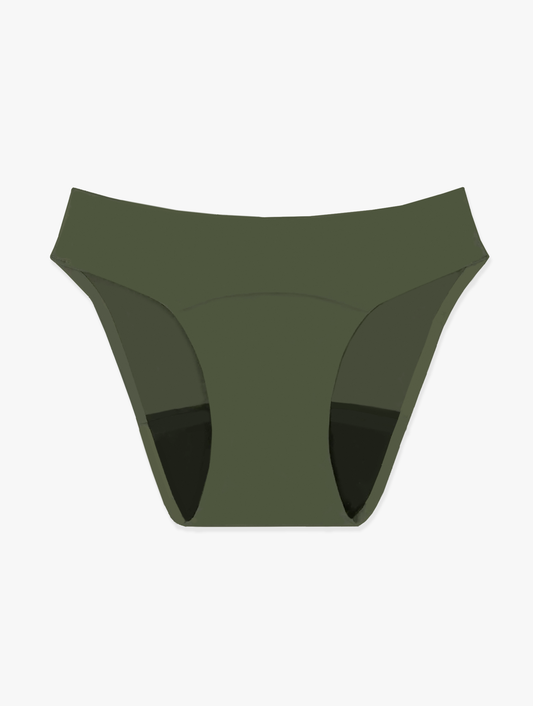
If you are between 36 and 40 years old, you are at risk because 25% of cases involve women in this age group! Also, having a very developed endometrium increases the risk of adenomyosis: this can be the case for women who have had several children, for example. Symptoms are not always present and resemble those of classic endometriosis: heavy periods requiring a menstrual panty for very heavy flow, long (more than 7 days) and painful, as well as bleeding outside of menstruation.
Parietal Endometriosis: a Consequence of Cesarean Section
Little known to the general public yet relatively common, parietal endometriosis can occur after a cesarean section, but also after a laparoscopy, a surgical procedure of the abdominal cavity. How does this happen?
When a woman cannot give birth vaginally, a surgeon must open her uterus. Despite all precautions taken, some endometrial cells are displaced from the uterus to other parts of the body exposed during the operation. They can then settle in the abdomen and at the scars generated by the surgery.
Later, they may migrate to the lower and posterior limbs, lungs, etc. They will also reproduce as they would have done within their original organ. The cells scattered throughout the body react in the same way to the hormone concentration present in the blood as their sisters in the uterus. This reaction causes pain where they have developed.
In this article, Annabelle tells us how she got rid of her parietal endometriosis.
By Emilie