How to Practice Free Flow Instinct?
Free flow instinct is a method aimed at mastering your blood flow during menstruation. Which women is this technique for? Are there any contraindications? Here are some details for you.










Why Practice Free Flow Instinct?
In theory, free flow instinct offers many advantages:
- An economical method: did you know that women spend an average of 18 euros per cycle on menstrual products? Not to mention the new panties regularly bought due to leaks during menstruation. By practicing free flow instinct, you can say goodbye to menstrual products: pads, tampons, or menstrual cups.
- An eco-friendly method: if you remember our last blog post about reducing waste during menstruation, you know that 45 billion sanitary pads are thrown away worldwide each year. Each takes about 500 years to decompose. From an ecological perspective, this is a real disaster. Here, all you need are your small pelvic floor muscles to help you stay dry!
- A healthy method: thanks to free flow instinct, you eliminate menstrual products and avoid the toxic substances with complicated names found in disposable pads and tampons sold in supermarkets: BMHCA, PAHs, pesticides, dioxins, furans, DnOP, and more.
- An empowering method: with free flow instinct, you are no longer dependent on your period. You no longer need to ask your best friend if she has a tampon in her bag! From now on, your best allies will be within yourself, starting with your ability to listen to your body!
Free Flow Instinct: How Does It Work in Practice?
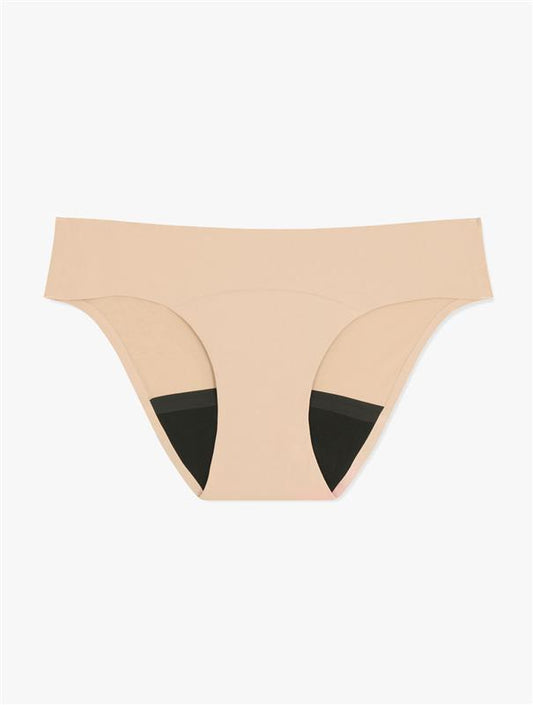
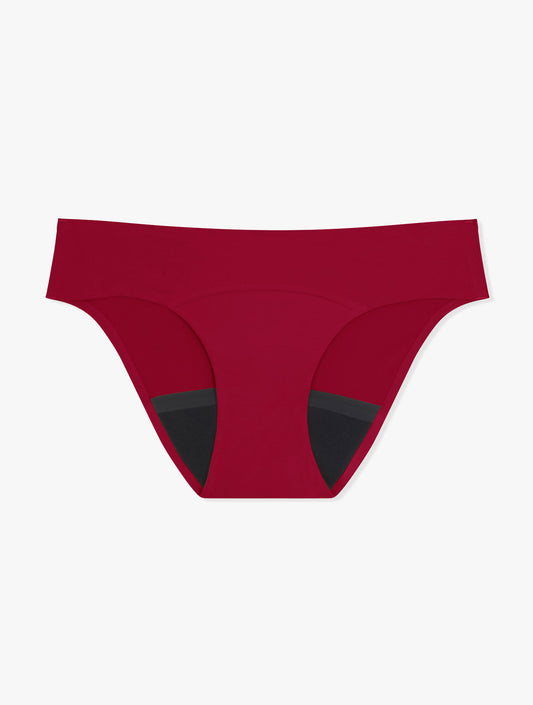
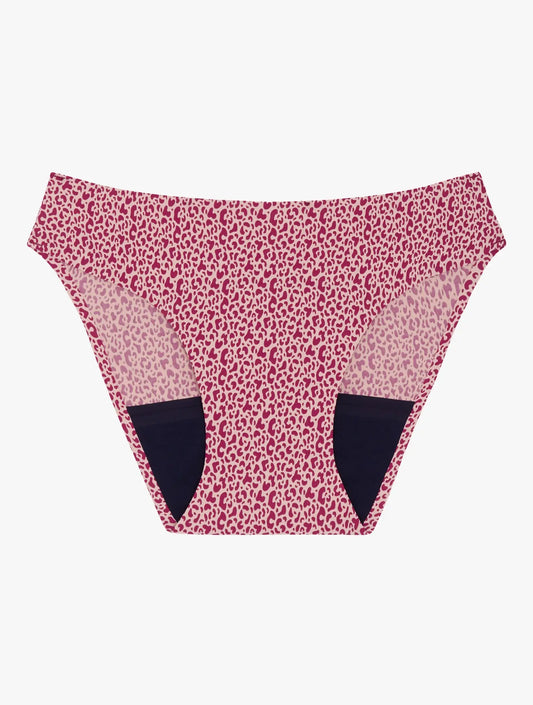
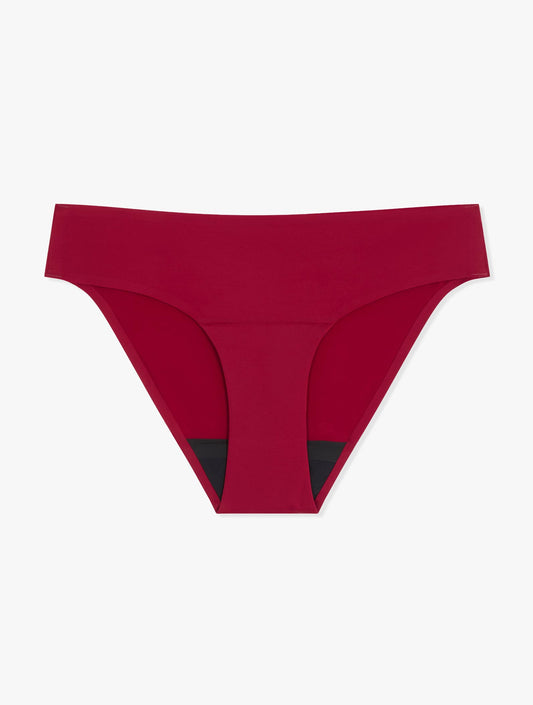
In practice, if you decide to try free flow instinct, expect to shake up your habits a bit. You will first need some patience, quite a bit of work, and a lot of calm. The technique will come gradually. Take advantage of a quiet moment like a vacation to start learning. Spend some time strengthening your pelvic floor and try this control technique on a day with light to moderate flow. We also recommend equipping yourself with SMOON menstrual panties or even a menstrual panty for very heavy flow to start without risking staining your clothes. Then, just like during a meditation session, be attentive to your body.
To better understand the challenge, here is some information about how the uterus and vagina work during the cycle.
Menstrual blood comes from the uterus where the endometrium (uterine lining) detaches at the end of the cycle when no fertilization has occurred and there is no pregnancy. This breakdown of the endometrium happens gradually, under the effect of uterine contractions. These contractions cause mild pain and signal the approach of blood flow. The challenge, if you accept it, is to identify these uterine contractions and then hold back the blood flow by contracting the pelvic floor muscles. Then, you simply go to the toilet and relax the pelvic muscles, especially the pelvic floor muscles, to release the pressure and let the retained blood flow out.
Free Flow Instinct: The Importance of the Pelvic Floor
The free flow instinct method is largely based on contracting the pelvic floor muscles to hold back the blood flow during menstruation. But what exactly is the pelvic floor?
The pelvic floor is a group of muscles and ligaments that stretches across the pelvis, between the pubis and the tailbone. Its role? To support the organs located in the pelvis such as the bladder, rectum, and uterus. It also allows contraction of the vagina and participates in urinary and fecal continence. Sometimes, the pelvic floor no longer functions properly for various reasons: pregnancy, childbirth, chronic constipation or cough, obesity, aging. The consequences of this weakening are often minor and temporary. Sometimes, they are more troublesome: vaginal laxity, urinary or fecal incontinence, genital prolapse (organ descent).
To regain good tone, a gynecologist will prescribe rehabilitation sessions under the supervision of a physiotherapist or midwife. Usually, you need to wait 6 to 8 weeks after childbirth before starting pelvic floor rehabilitation.
The Controversy Around Free Flow Instinct
Although free flow instinct seems simple in theory, few women continue to practice it long-term. According to several "learners," this method is:
- Demanding: to practice free flow instinct, you absolutely need nearby toilets, at least at first, and you also need quiet moments to keep calm and feel the sensations in your body. This is not easy when you’re running everywhere, going from a crowded subway in the morning to countless tasks at work.
- Inaccessible for some women: for those with irregular periods, but especially heavy or very heavy periods, the method can be discouraging. Stopping an almost unlimited flow with free flow instinct is nearly impossible unless you spend your life in the bathroom. This is almost unmanageable for those of us with a copper IUD. The same goes for those trying this method right after childbirth. Your gynecologist will strongly advise against learning free flow instinct without completing your pelvic floor rehabilitation.
- Anatomically complicated: unlike urine, which is controlled by our urethra, menstruation has no sphincter (a circular muscle around a natural canal that closes it by contraction) to prevent blood flow. We can only rely on our pelvic floor muscle to block its exit. So, you really can’t relax. Otherwise, disaster is guaranteed.
- Uncertain at night: even when we sleep, our body keeps working and our blood keeps flowing. The question then is: what about instinct during sleep? And how to prevent flow when we relax our muscles to sleep?
- Potentially dangerous: by preventing blood from flowing out through the vagina and vulva, there is a risk it flows back into the uterus and then the fallopian tubes. According to some gynecologists, this could cause pelvic infection. Worse, it could be the cause of endometriosis. (As a reminder, endometriosis is a condition characterized by the presence of endometrial cells (lining of the uterus) outside the uterine cavity. Endometriosis can affect the ovaries, rectum, bladder. The theory of retrograde menstruation (implantation theory) might explain this phenomenon. In short, during menstruation, under uterine contractions, some blood is pushed back into the fallopian tubes and reaches neighboring organs.)
It’s safe to say that free flow instinct raises questions about its safety. Needless to say, this technique is strongly discouraged for women suffering from endometriosis.
Beyond the pros and cons of free flow instinct, it’s above all a matter of feeling. Listening to your body is not always easy, but if you are comfortable with your sensations (and your menstruation), all that’s left is to try it yourself. And for all women who don’t feel ready to take the plunge but want freedom from traditional menstrual products, menstrual panties are the perfect allies! Check out our article on 5 good reasons to adopt menstrual panties.
By Valérie.